
ABB Egypt Targets Regional Expansion: Data Centers, Smart Factories, and AI-Driven Automation in Focus
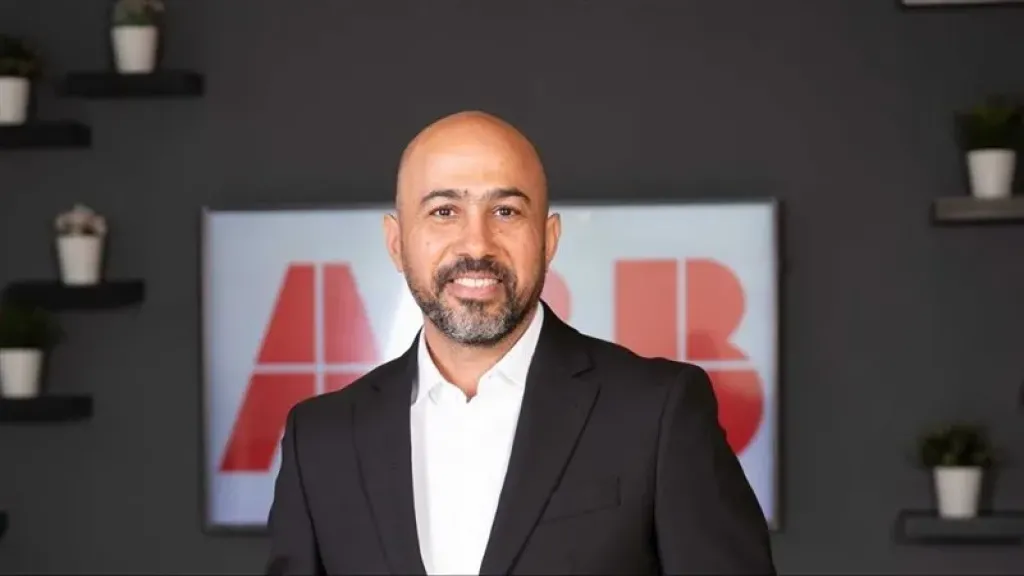
"Egypt is moving at an accelerated pace to build a robust industry for data centers and artificial intelligence, parallel to expanding renewable energy projects and modernizing electrical grids. This aligns with a national directive to attract new technological investments and solidify the country’s position as a regional hub for digital infrastructure and advanced services."
This transformation opens a vast market for technology and energy firms, led by ABB Egypt, which operates at the intersection of electrification, automation, digitalization, and energy management—core components for running modern data centers, smart factories, and contemporary industrial infrastructure.
ABB Egypt does not view the domestic market solely as a destination for providing solutions, but rather as a regional base for manufacturing, engineering, and export. The company’s footprint is anchored by a legacy spanning over a century and a 100,000-square-meter industrial complex in the 10th of Ramadan City, which serves as its primary manufacturing hub in the region.
The company's figures reflect the scale of this role: local content in some ABB Egypt products has reached 78%, while approximately 25% of its production is directed to foreign markets. By the end of the first half of 2026, exports of its products and services from Egypt reached over 60 countries.
In an exclusive interview with Fintech Gate, Ahmed Hammad, Chairman of ABB Egypt, discusses the opportunities for participation in new data center projects, the future of AI and smart factories, the company’s plans to boost local manufacturing and exports, and the expansion of its electrification and automation solutions. He also outlines ABB's vision for Egypt's role as a regional manufacturing, engineering, and technology hub.
■ What are the opportunities for deploying ABB Egypt’s technologies in the expanding data center projects across Egypt and the region, particularly regarding power management, energy efficiency, and operational optimization?
Hammad: Data centers are among the sectors that demand exceptionally high levels of reliability and stability in power supply, alongside operational efficiency and rigorous energy management. ABB Egypt’s technologies contribute directly to providing the electrical infrastructure, automation systems, and energy management required to support the stability and efficient operation of these centers. With the rapid growth of the data center sector in Egypt and the broader region, ABB Egypt possesses the expertise and solutions that qualify it to participate in the new projects being rolled out in this field, tailored to the specific needs and operational requirements of each facility.
■ How is ABB Egypt leveraging artificial intelligence and data analytics within the electrification and automation solutions it currently offers in the Egyptian market?
Hammad: ABB’s strategy relies on integrating AI technologies and data analytics into the very core of our electrification, automation, and motion solutions. Through this integration, our objective is to equip our customers with precise, actionable analytical insights that support rapid decision-making and enhance operational performance. This direction underscores our commitment to innovation; we help industrial facilities boost productivity and profitability while operating under "Leaner and Cleaner" models through optimal resource utilization and reduced environmental footprints.
■ Is ABB Egypt deploying Predictive Maintenance technologies in the Egyptian market, and how can AI assist in detecting faults before they occur?
Hammad: Industrial maintenance is undergoing significant evolution through the adoption of AI and data analytics, enabling a shift from traditional maintenance methods to a more proactive approach based on continuous equipment condition monitoring and performance analysis. This approach helps detect abnormal indicators early and addresses potential issues before they disrupt operations, thereby improving reliability and minimizing unplanned downtime.
At ABB, we are deploying advanced monitoring and analytical solutions to help clients track equipment performance and better interpret operational data, which supports more accurate decision-making regarding maintenance and operations. These solutions can be applied across various industrial sectors, tailored to the nature of the processes, equipment, and specific needs of each facility, with the ultimate goal of optimizing operational efficiency, enhancing reliability, and extending the operational lifespan of assets.
■ What role do digital solutions and remote monitoring and control platforms play in ABB Egypt’s operations, and is customer adoption in Egypt increasing?
Hammad: Digital solutions have become a fundamental element in optimizing the management of industrial facilities. They grant the customer superior visibility into what is happening inside the plant, helping them monitor performance and make faster, more accurate decisions.
As reliance on automation expands, it has become crucial that technology is not limited merely to controlling equipment, but also extends to understanding data and continuously improving processes. We are witnessing growing interest in these solutions within the Egyptian market, particularly among companies that view digitalization as a practical tool to improve productivity, efficiency, and energy management, rather than just a technological trend.
■ To what extent are Egyptian factories currently migrating toward the "Smart Factories" concept, and what are the main obstacles hindering the acceleration of this transition?
Hammad: There is genuine, growing momentum toward smart factories in Egypt, clearly evidenced by critical national initiatives such as the Smart Industry Readiness Index (SIRI), launched by INCIT in partnership with the Information Technology Industry Development Agency (ITIDA) and the German agency GIZ. This provides factories with a clear metric to gauge their digital readiness and build a practical roadmap for transformation. Initiatives of this caliber reflect the maturity and seriousness of the Egyptian market regarding this agenda.
Based on our extensive experience in the sector, we see that the real opportunity lies in aligning technology investments with human skills development. In this context, ABB’s strategy goes beyond merely providing technical solutions to encompass direct investment in qualifying national cadres capable of managing and developing these technologies, as clearly demonstrated by our partnership with Ain Shams University. We believe this integration is the fundamental pillar for accelerating digital transformation sustainably and effectively.
■ What is the volume of demand in Egypt for ABB’s industrial automation and digital transformation solutions, and which sectors are investing most heavily in these technologies?
Hammad: Demand is clearly on the rise. The industrial automation market in the Middle East and Africa is experiencing remarkable growth, driven by a corporate shift away from upgrading isolated systems toward comprehensive digital transformation projects that integrate sensors, AI analytics, and energy management.
Today, ABB serves a broad spectrum of vital sectors in Egypt, ranging from oil, gas, and chemicals to data centers, cement, metals, food and beverage, and water. This diversity accurately reflects the breadth of our portfolio and our capability to deliver solutions specifically tailored to the needs of each sector.
■ Does ABB Egypt have plans to introduce new technologies or solutions to the Egyptian market in the near future across energy management, automation, or industrial control?
Hammad: We view this portfolio from a long-term strategic perspective. The Egyptian government has set an ambitious target to raise the contribution of renewable energy to 45% of the electricity mix by 2028, coupled with international support from the European Union to modernize the grid. This national momentum aligns perfectly with our strategic direction at ABB, as we continue to develop energy management solutions, smart grids, and advanced protection systems to support this transition.
A prime example is our recent contract with the Egyptian Electricity Transmission Company (EETC), valued at over $4 million, to supply and install 12 units of UniGear ZS1 medium-voltage switchgear across several substations in Cairo. These panels are equipped with digital technologies and IoT sensors that enable continuous monitoring of equipment condition, temperatures, and environmental variables, thereby enhancing grid reliability and operational efficiency, and laying the essential infrastructure to integrate future renewable energy sources.
■ How can ABB Egypt’s technologies assist Egyptian companies and factories in reducing electricity consumption, lowering operational costs, and cutting carbon emissions?
Hammad: We believe that energy efficiency is the cornerstone of business efficiency. Our success in optimizing the energy consumption of any facility translates directly into reduced operational costs, enhanced competitiveness, and a smaller environmental footprint. The Toshka project in the New Valley stands out as a practical model demonstrating the power of this integration; by merging electrical infrastructure with smart automation systems, we achieved exceptional energy savings compared to conventional systems. This project translates ABB’s vision for the future of industrial performance, where reliable energy and smart operations work in perfect harmony—not only to meet industrial demands but to drive sustainable national growth.
■ How is ABB Egypt capitalizing on the expansion of renewable energy projects, smart grids, and energy storage in Egypt, and what are the key technologies the company provides to these sectors?
Hammad: The transition to renewable energy requires a comprehensive ecosystem of smart, resilient grids, a domain where ABB possesses deep global expertise through our electrification, protection, automation, and energy management solutions.
With Egypt’s ambitious drive to increase the share of renewables, we see a massive opportunity before us to support this national transition—whether by optimizing grid efficiency, managing diverse generation sources, or assisting industrial sectors in utilizing energy more efficiently. We are making tangible investments in this area because we believe in Egypt’s pioneering role in driving this regional transition.
■ Is ABB Egypt targeting higher rates of technology localization and engineering manufacturing in the coming period, rather than relying on fully imported solutions?
Hammad: Localization is a core pillar of ABB’s strategy in Egypt, and we approach it from a broader perspective that goes beyond mere manufacturing to encompass the development of a comprehensive ecosystem of engineering capabilities and human capital. This vision has yielded concrete results: we have successfully increased the local content in some of our production lines to 78%. More importantly, our "Made in Egypt" products are no longer confined to meeting local market demands; their export map expanded to include over 60 countries by the end of the first half of 2026, prominently including Germany—the heart of European industry. This confirms that our localization is intrinsically linked to the highest quality standards and reflects an Egyptian manufacturing capability that competes strongly in global markets.
■ What is the current volume of ABB Egypt’s investments, how have they evolved in recent years, and which sectors claim the largest share? Does the company intend to inject new investments soon, whether in local manufacturing, engineering hubs, or the development of digital products and solutions?
Hammad: ABB’s journey in the Egyptian market spans over a century, and our current investments reflect this long-term strategic commitment. Today, we manage our operations across seven primary sites, led by the advanced manufacturing complex in the 10th of Ramadan City, covering 100,000 square meters. It serves as the company’s main manufacturing hub for the Middle East and Africa. This continuous expansion is underpinned by a vast network of partners across vital sectors and supported by our firm belief in the Egyptian market’s ability to create sustainable, value-added growth.
Regarding our future plans, we will continue directing our investments to bolster our engineering and manufacturing capabilities, buoyed by our success in achieving 78% local content in select products. The bulk of these investments will focus on talent development and the localization of advanced technologies in digitalization, energy efficiency, and automation, ensuring complete alignment with the strategic priorities of Egyptian industry.
The significance of this integrated manufacturing and engineering base extends beyond fulfilling local market needs; it serves as a strategic platform to scale our operations globally. This is clearly reflected in our export metrics: we directed approximately 25% of our total production in 2025 to foreign markets spanning over 50 countries. We maintained this upward trajectory through the first half of 2026, pushing our product and service exports to over 60 countries, covering key markets across Europe, Latin America, and the Middle East and Africa.
■ What factors dictate ABB Egypt’s investment decisions, and does the company view the Egyptian market as a potential regional hub for exporting engineering and technological solutions to African and Middle Eastern markets?
Hammad: For ABB, Egypt represents a critical regional hub for manufacturing and engineering, capitalizing on the size of the local market, the established manufacturing base, the strategic geographic location, and the human capital that constitutes a core element in developing our capabilities.
This regional role is manifested in the expansion of our operations from Egypt, with approximately 25% of our total output exported to regional and international markets—a map that expanded to encompass over 60 countries by the end of H1 2026 across Africa, Europe, and Latin America.
We are continuously working to upgrade our manufacturing and engineering capabilities in Egypt, enabling us to simultaneously meet local market demands and serve foreign markets. This approach supports the deepening of local industrialization, technology localization, the development of Egyptian talent, and ultimately reinforces Egypt's role as a regional hub for ABB's operations.