
Startup Egypt Teams Up With FRA Sandbox to Give Fintech Founders a Clearer Route to Market
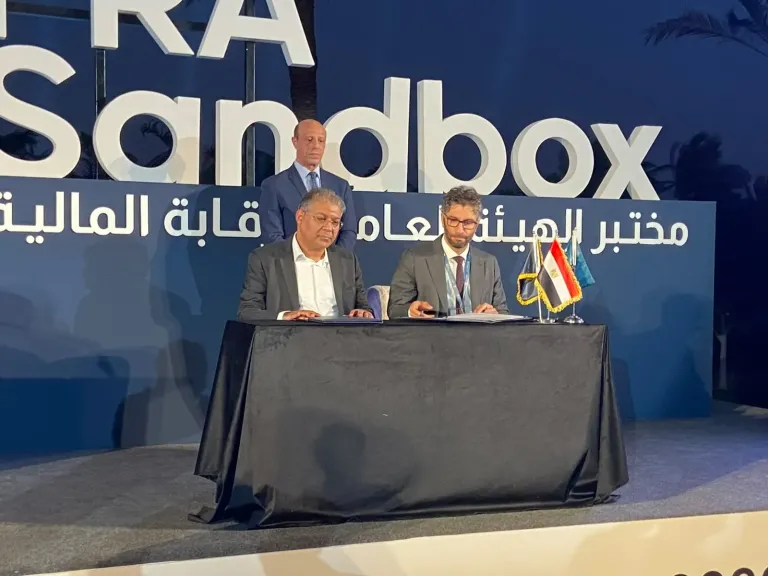
Startup Egypt has signed a cooperation protocol with the Financial Regulatory Authority’s regulatory sandbox, FRA-Sandbox, in a move aimed at giving fintech startups earlier access to regulatory guidance and a more structured path for testing new business models before taking them to market.
The agreement brings together two parts of Egypt’s startup ecosystem that often operate separately: founders building new financial products and the regulator responsible for determining whether those products can operate within the country’s non-bank financial framework.
Under the protocol, Startup Egypt will help connect more entrepreneurs and startups with the sandbox, while the two sides will also work on developing a digital fintech marketplace designed to map companies, investors and other participants across the sector.
The agreement was signed by Ayman Bazaraa, Vice Chairman of Startup Egypt’s Board of Trustees, and Ahmed Khalifa, Executive Director of the FRA-Sandbox.
Giving founders regulatory feedback before they scale
The FRA-Sandbox allows fintech companies and entrepreneurs to test innovative business models and technology solutions in a supervised environment before launching them more broadly.
For startups, that can reduce one of the biggest risks in regulated industries: building a product first and discovering later that parts of the model do not meet regulatory requirements.
Instead, participating companies can evaluate their solutions against the applicable rules, understand compliance expectations and refine their models before committing more capital to expansion.
Ahmed Khalifa said the sandbox is designed to provide a flexible and secure environment where fintech companies can test innovative solutions and assess their compatibility with regulatory frameworks before going to market.
He added that Startup Egypt’s experience and network across the entrepreneurship community could help the sandbox reach more promising companies and provide them with regulatory guidance at an earlier stage.
A digital map of Egypt’s fintech ecosystem
A central part of the partnership will be the development of the sandbox’s Fintech Market Platform and its connection with Startup Egypt’s own platform.
The planned digital marketplace is intended to create an interactive map bringing together startups, angel investors, venture capital funds and other participants in the fintech ecosystem.
The goal is not simply to list companies.
By connecting founders with potential investors, support programs and relevant opportunities, the platform could become a more practical matchmaking layer across the market, particularly for early-stage companies that often struggle to identify the right source of capital or regulatory support.
Fintech innovation moves into universities
The protocol also extends beyond existing startups.
Startup Egypt and the FRA-Sandbox plan to organize awareness and innovation programs for university students, encouraging them to develop graduation projects around financial technology.
The two sides will also run competitions and innovation challenges in areas including green finance and insurtech, with promising teams and solutions potentially moving on to the regulatory sandbox.
That creates a pipeline that starts before a company is formally established, giving student projects a possible route from university experimentation into a regulated testing environment.
Compliance becomes part of startup readiness
The cooperation will also cover joint assessment of startups from both technical and regulatory perspectives.
That includes helping companies understand and meet compliance requirements related to their activities, with the aim of making them better prepared for investment and growth.
This is particularly important in fintech, where technical readiness and regulatory readiness are often equally important.
A company may have a working product and a viable market opportunity, but if its compliance model is incomplete, that can delay licensing, investment or commercial rollout.
Ayman Bazaraa said Startup Egypt’s role is to act as a link between founders and the sources of support and opportunity they need to grow.
He said the partnership with the FRA-Sandbox strengthens that role by giving more startups access to a regulated environment where they can test solutions, understand supervisory requirements and develop their business models before expanding in the market.
The bigger value is reducing friction
The most important part of the agreement may be less visible than the platform or the competitions.
By bringing founders and regulators into contact earlier, the partnership could reduce the friction that often appears late in a startup’s development cycle, when compliance issues become more expensive to fix.
For Egypt’s fintech sector, that matters.
Innovation in financial services does not move on technology alone. It also depends on whether a new product can meet regulatory expectations, protect users and operate within a framework that investors and institutions can trust.
The Startup Egypt–FRA-Sandbox partnership is essentially an attempt to shorten that distance between innovation and regulation, giving founders a clearer route from prototype to compliant, investable business.