
Global LNG Supply Rises in July Amid Hormuz Bottlenecks and Egypt Import Strains
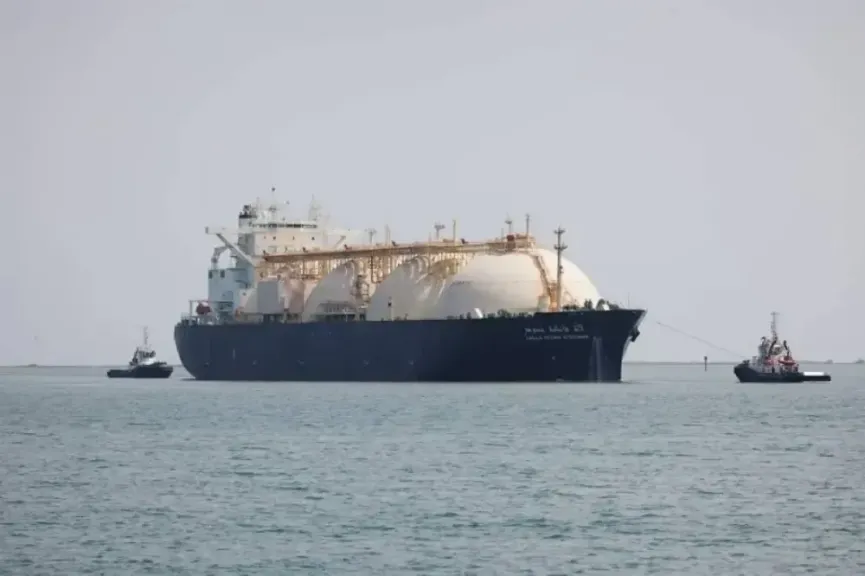
Global liquefied natural gas (LNG) supplies climbed in July, but the market continues to grapple with headwinds stemming from Middle East instability and shipping bottlenecks through the Strait of Hormuz. The supply shift coincided with a rebound in Asian demand driven by intense heatwaves, while European imports dropped to their lowest levels in nearly two years.
According to energy research firm Rystad Energy, global LNG supply rose 3% month-on-month, supported by strong output from the United States and Australia. However, volumes remained 9% lower year-on-year due to the prolonged impact of regional conflict. Global production expanded by 1.5 million tonnes in July to reach roughly 33 million tonnes, though the modest recovery has yet to resolve broader market imbalances.
Hormuz Bottlenecks Continue to Constrain Flows
Rystad Energy noted that while Qatari LNG loadings more than doubled compared to June, only a fraction of the cargoes were able to transit out of the Strait of Hormuz, keeping outgoing volumes down 81% year-on-year. During July, approximately 1.3 million tonnes of LNG were loaded within the waterway, yet only 0.3 million tonnes successfully exited.
QatarEnergy extended its force majeure declaration on shipments heading to Europe through September, as passage through the strait remains subject to stringent security risks and navigation constraints.
Egypt Faces Import Capacity Constraints
Damage sustained by vessels and infrastructure tied to LNG imports at Damietta has placed added pressure on Egypt’s ability to secure fuel supplies during the peak summer demand season.
According to Rystad Energy, Egypt’s nominal regasification capacity—excluding the compromised vessels—is limited to around 1.4 million tonnes per month. This falls short of the 1.57 million tonnes of LNG the country imported in July, amplifying supply risks across the remainder of the summer, when gas demand peaks to power the national electricity grid.
The Ministry of Petroleum and Mineral Resources had announced in late July that a fire broke out aboard a regasification unit and a storage vessel docked at Damietta Port. Preliminary investigations into the July 29, 2026 incident confirmed that the fire was caused by a drone strike.
Despite these headwinds, global LNG trade in July outperformed Rystad Energy’s projections by around 1.6 million tonnes, bolstered by resilient production in Australia and Qatar, combined with elevated Egyptian import volumes and robust demand across several emerging Asian markets.