
Five Reasons You Might Want to Think Twice Before Buying a Samsung Galaxy Phone
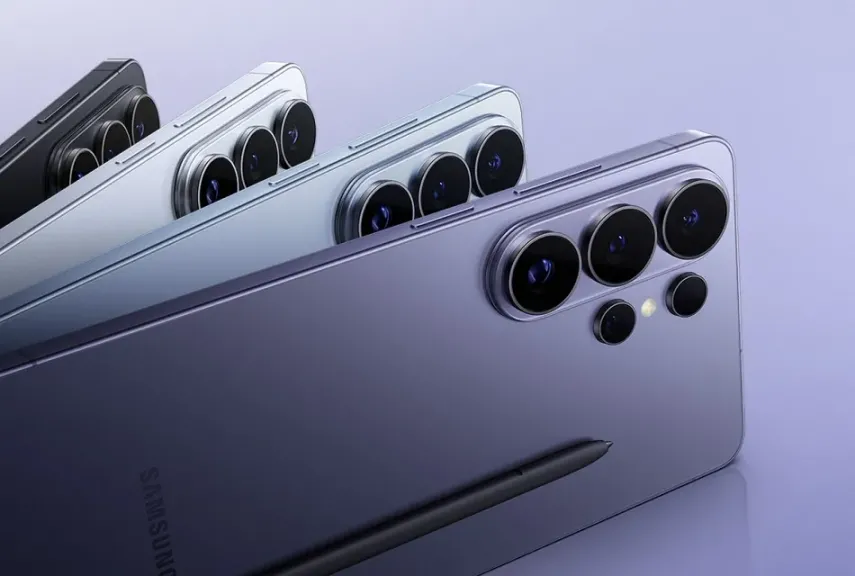
Samsung Galaxy phones are among the most successful Android devices on the market, offering some of the best displays, capable cameras and one of the longest software-support commitments available on a smartphone.
But that does not mean they are automatically the best choice for everyone.
A recent Tech Advisor report highlighted five recurring weaknesses that could make buyers consider alternatives before choosing their next Galaxy phone, ranging from software clutter and charging speeds to Samsung’s processor strategy and increasingly familiar designs.
Too many apps before you install your own
The first complaint begins as soon as a new Galaxy phone is switched on.
Samsung’s One UI includes a considerable number of the company’s own apps alongside Google’s Android services, sometimes creating duplicate options for everyday functions such as browsing, calendars and app downloads.
Third-party applications can add further clutter on some devices.
For users who enjoy Samsung’s ecosystem, many of those services are useful. But buyers looking for a cleaner Android experience may find themselves spending time removing or disabling applications they never intended to use.
Tech Advisor points to Google’s Pixel phones as an alternative for users who prefer a less crowded software experience.
Charging still feels slow against the competition
Samsung has taken a relatively conservative approach to charging speeds, and the difference becomes particularly obvious when Galaxy devices are compared with some Chinese rivals.
The Galaxy S26, for example, remains limited to 25W wired charging, while the S26+ supports 45W. Tech Advisor’s testing of the S26 also found charging performance to be one of the phone’s clearest weaknesses.
By comparison, several competing Android manufacturers now offer substantially faster charging.
Tech Advisor cites Xiaomi’s 15T Pro as an example, with its 90W wired charging capable of replenishing its 5,500mAh battery in around 36 minutes.
Samsung’s approach may appeal to users who place less importance on rapid charging, but anyone accustomed to plugging in for a few minutes and recovering a large amount of battery life could notice the difference.
Exynos remains a point of contention
The processor inside a Galaxy phone can also vary depending on where it is purchased.
Samsung has historically used a combination of its own Exynos processors and Qualcomm’s Snapdragon chips across different markets and models, creating what Tech Advisor describes as a “chip lottery.”
The criticism is not simply about benchmark scores.
Tech Advisor argues that some Exynos-powered versions can perform less favorably in areas such as sustained gaming performance, heat management and power efficiency compared with Snapdragon alternatives.
That does not make every Exynos phone slow, nor does it affect every Galaxy model in the same way. But buyers interested in intensive gaming or maximum sustained performance may want to check exactly which processor is fitted to the version sold in their market before purchasing.
Great cameras can still miss a moving moment
Samsung’s flagship phones have developed a strong reputation for photography, but shutter lag remains a recurring criticism.
The problem becomes most noticeable when photographing children, pets, sports or other fast-moving subjects. Even a small delay between pressing the shutter button and capturing the final frame can mean the photograph records a slightly different moment from the one the user intended.
Tech Advisor argues that this remains noticeable even on Samsung’s recent Galaxy devices and contrasts the experience with rivals increasingly using AI-assisted modes to capture movement more quickly.
For landscapes, portraits and stationary subjects, this may barely matter. For users constantly trying to capture unpredictable movement, it can become considerably more frustrating.
Samsung phones are starting to look very familiar
The fifth criticism is less about performance and more about personality.
Samsung has created an increasingly consistent visual identity across its smartphone portfolio. The downside is that affordable Galaxy A-series devices can now look surprisingly similar to much more expensive Galaxy S models.
That consistency makes Samsung phones immediately recognizable, but Tech Advisor argues that it has also made successive generations feel increasingly predictable.
For buyers who view their smartphone as a design object as much as a piece of technology, competing manufacturers are experimenting more aggressively with camera modules, materials, colors and unconventional rear designs.
There are still plenty of reasons to buy a Galaxy
None of these criticisms changes the fact that Samsung continues to produce some of the strongest Android phones available.
Tech Advisor itself highlights Samsung’s excellent displays, mature device ecosystem and lengthy software support as major advantages, with top Galaxy models receiving seven years of updates.
The Galaxy S26 also received praise from the publication for its compact design, cameras and long-term software support despite criticism of its charging speed and limited generational upgrades.
The question, then, is not whether Samsung phones are good.
It is whether their particular compromises matter to you. If fast charging, clean Android software, consistent processor choices, instant action photography or distinctive design sit near the top of your priorities, Samsung’s biggest competitors may now have a stronger argument than they did a few years ago.