
UAE Raises Clean Energy Target to 35% by 2031 Amid Storage and Tech Breakthroughs
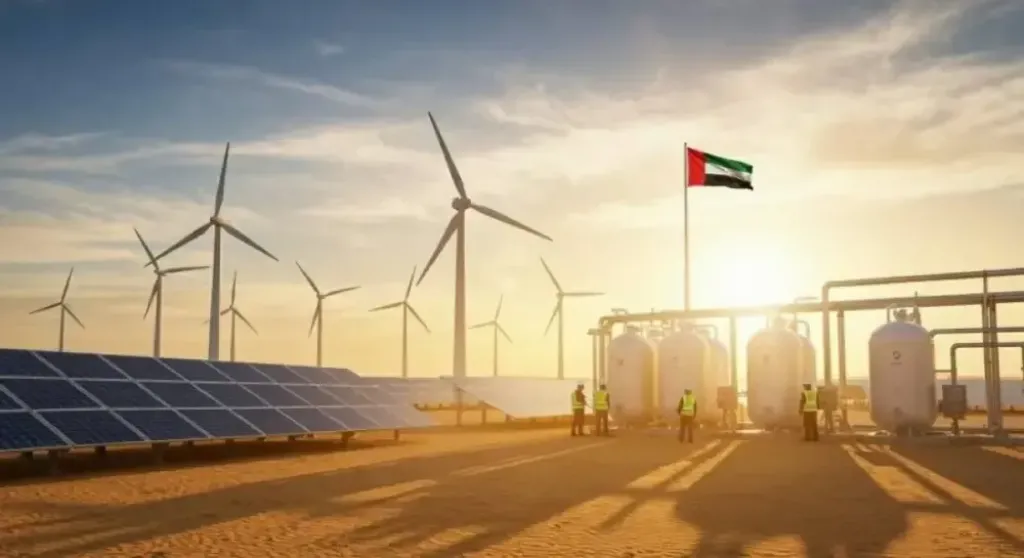
The United Arab Emirates is revising its national energy strategy, targeting a 35% share of clean energy—encompassing both renewable and nuclear sources—in its overall energy mix by the years 2030 and 2031.
UAE Minister of Energy and Infrastructure Suhail bin Mohammed Al Mazrouei announced the upgraded target on the sidelines of the "Middle East Energy 2026" exhibition at the Dubai World Trade Centre. He noted that the strategy is being continuously updated to reflect rapidly declining technology costs and the evolving energy demands of a growing industrial base and expanding data center infrastructure.
Capacity Expansion and Project Pipeline
The UAE's current installed renewable energy capacity has surpassed 7.7 gigawatts (GW). With a robust pipeline of upcoming projects, the nation expects to triple this figure, reaching a total clean energy capacity of more than 23 GW by 2031.
The Battery Storage Revolution
A critical driver of this accelerated timeline is the rapid advancement in commercial energy storage.
24-Hour Viability: Modern battery technologies can now store electricity for up to 24 hours at highly competitive prices, drastically outperforming older systems limited to just a few hours.
Grid Stability: This breakthrough effectively untethers solar power from daylight constraints, allowing surplus daytime generation to be dispatched seamlessly at night, ensuring round-the-clock grid stability despite the intermittent nature of solar and wind resources.
Private Sector Integration
Achieving the 35% benchmark will require intensified market competition and expanded private sector participation. Al Mazrouei emphasized that the UAE’s power generation sector has long operated on an open-market model driven by public-private partnerships. This collaborative approach has successfully lowered operational costs, improved governance standards, and executed massive-scale solar and nuclear infrastructure projects. Furthermore, this competitive domestic ecosystem has empowered national champions like Masdar to successfully bid on and develop major energy projects in international markets.