
Egypt Starts Biometric Verification With Telecoms — Government Services Are Next
Egypt’s newly launched biometric verification system is starting with mobile services, but the bigger ambition goes far beyond telecoms: creating a digital identity layer that could eventually allow citizens to complete a wider range of government transactions remotely.
Mahmoud Badawy, Assistant Minister of Communications and Information Technology for Digital Transformation, said telecoms were deliberately chosen as the first testing ground because mobile services touch virtually every segment of the population.
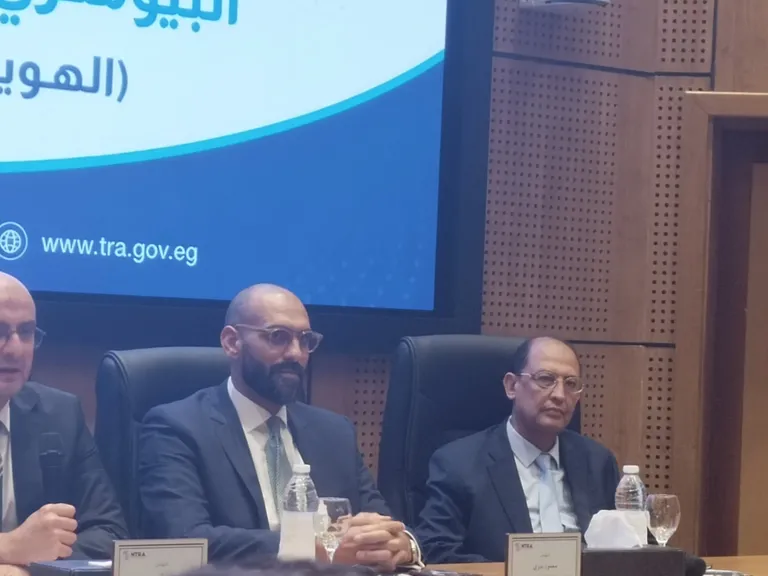
Speaking at the launch of Egypt’s electronic biometric verification system, Badawy said the initial rollout should be viewed as the first step toward deploying the technology across a broader range of services.
The direction reflects a challenge that becomes more important as governments digitize more transactions. Putting a service online is relatively straightforward, but allowing citizens to complete sensitive procedures remotely requires a reliable way to establish who is actually sitting behind the screen.
Biometric verification is intended to solve that part of the equation.
Beyond simply putting services online
Badawy said Egypt’s approach is built around redesigning the entire digital transaction rather than moving individual procedures from a government office to a website or app.
That journey has three core components: verifying the citizen’s identity, completing the requested transaction and electronically signing the documents needed to finalize it.
Bringing those elements together could make it possible to complete an end-to-end government transaction without requiring the citizen to appear physically at a service center.
The telecom sector provides an early real-world environment in which to apply that model because many mobile transactions already require strict identity checks.
Egypt’s National Telecommunications Regulatory Authority has begun allowing the country’s four mobile operators to use electronic verification for services that traditionally depended on branch visits, creating an initial use case for the technology before its potential expansion elsewhere.
For the government, however, telecoms are the starting point rather than the final destination.
As more public services become digital, the same identity infrastructure could potentially be reused across different transactions instead of requiring citizens to prove who they are through separate processes every time they access a sensitive service.
Electronic signatures are the next piece
Identity verification alone does not make a transaction fully digital.
Some procedures still require a legally recognized signature before they can be completed, making electronic signatures another critical component of the model being developed.
Badawy said further steps related to electronic signatures will be announced during the coming period as the Ministry of Communications and Information Technology works with relevant authorities to complete the wider digital service framework.
The combination of biometric identity checks and electronic signatures could ultimately change how digital government services are designed in Egypt: a citizen proves their identity remotely, completes the transaction and signs the required documentation within the same digital journey.
Starting with mobile services gives Egypt an opportunity to test that model at scale. The larger test will come next — when the same infrastructure begins moving from telecom apps into everyday government services.