
Mitsubishi Heavy Industries Secures World”s Largest Automated People Mover Contract for Dubai’s New Al Maktoum Airport
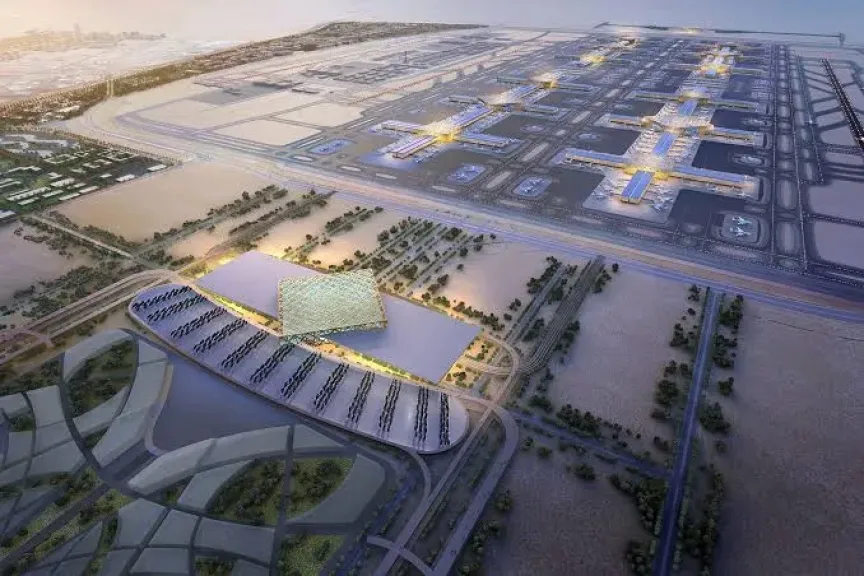
Japan's Mitsubishi Heavy Industries (MHI) announced that it has secured a contract to implement the Automated People Mover (APM) system for the first phase of the new Al Maktoum International Airport development plan in Dubai, United Arab Emirates.
In a statement published on its website, the company clarified that the contract was awarded by a Dubai government aviation establishment to MHI as part of a three-company consortium. This consortium includes Mitsubishi Heavy Industries - Mobility Engineering & Services Company (MHI-MESC), an MHI subsidiary in Dubai, and the Indian multinational conglomerate Larsen & Toubro Limited (L&T).
The Largest Contract of Its Kind Globally
The APM system to be implemented under this contract will be the largest of its kind in the world, spanning approximately 50 kilometers and connecting 9 stations, representing an unprecedented scale for an airport automated transit system.
As the consortium leaders, MHI and MHI-MESC will oversee the design, supply, and testing of 165 APM vehicles and the signaling system—which form the core components of the network—along with comprehensive system integration. Meanwhile, Larsen & Toubro will be responsible for the design, supply, testing, and on-site construction of other subsystems. The project is scheduled for completion in December 2031.
Al Maktoum International Airport Development
The development of Al Maktoum International Airport is a large-scale national project led by the Dubai government, aiming to establish one of the world's largest aviation hubs, with a targeted opening in 2032.
The airport is expected to ultimately serve 260 million passengers annually, with plans for a gradual expansion in capacity. The APM system will seamlessly connect airport terminals and key facilities to accommodate surging passenger traffic. The introduction of this system is set to enhance passenger comfort, significantly reduce transit times, and boost the overall efficiency of airport operations to keep pace with the future surge in air travel demand.