
Google Cloud Security heads to FDC Summit 2026 as cyber defense enters the agentic AI era
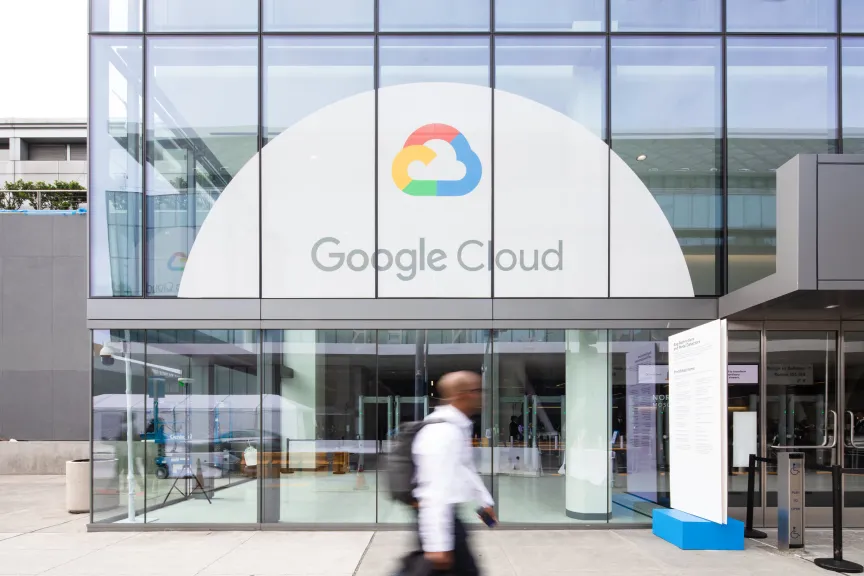
Google Cloud Security is heading to Cairo for FDC Summit 2026 with a cybersecurity story that goes far beyond protecting cloud infrastructure, as artificial intelligence begins to change not only how cyberattacks are launched, but how organizations detect and stop them.
The company is joining this year’s FDC Summit as a Prime Partner, with the event scheduled to take place from September 22 to 24, bringing together technology leaders, cybersecurity specialists and decision-makers as Egypt and the wider region accelerate their digital transformation plans.
For Google Cloud Security, the timing is particularly significant. Over the past year, the company has been moving aggressively toward what it describes as “agentic defense”, a model in which AI does more than assist security analysts by summarizing alerts or suggesting actions, and instead begins to autonomously investigate threats, hunt for suspicious activity and accelerate response.
That shift could become the central story behind Google Cloud Security’s presence at FDC Summit 2026.
From cloud security to an AI-powered defense ecosystem
Google Cloud Security has evolved into one of the broadest security portfolios within the global cloud market, combining Google’s own infrastructure and artificial intelligence capabilities with threat intelligence and incident response expertise from Mandiant, alongside the cloud security technology added through Wiz.
The result is an increasingly integrated security ecosystem covering cloud workloads, applications, identities, data, security operations and, increasingly, AI systems themselves.
This expansion comes as enterprises face a very different threat environment from only a few years ago.
Artificial intelligence is making it easier for attackers to automate parts of the attack lifecycle, improve social-engineering campaigns, analyze vulnerabilities and adapt malicious code, while AI agents are also beginning to operate inside corporate environments with access to applications, data and business systems.
Google’s response has been to push cybersecurity toward the same level of automation.
Google AI Threat Defense takes center stage
One of the most important technologies Google Cloud Security could put in the spotlight at FDC Summit is Google AI Threat Defense, unveiled in May 2026 as an always-on autonomous security architecture designed to help organizations respond to AI-driven attacks at machine speed.
Rather than treating vulnerability management as a process that begins when a security team receives an alert, Google is attempting to create a continuous cycle that identifies exposure, determines which risks are actually exploitable, analyzes vulnerable code, accelerates remediation and continues monitoring the environment.
The platform brings together several major pieces of Google’s security portfolio.
Gemini provides AI reasoning capabilities, Wiz contributes contextual cloud risk analysis, Mandiant brings frontline threat intelligence and incident-response expertise, while Google’s security technologies add capabilities for code analysis, threat detection and remediation.
That combination reflects an important change in cybersecurity thinking.
Security teams have traditionally had to deal with thousands of vulnerabilities and alerts, many of which may never become an actual attack path. AI Threat Defense is designed to prioritize the vulnerabilities that pose the greatest real-world risk and help organizations move toward fixing them before attackers can take advantage.
When the SOC gets its own AI agents
Google’s transformation is also reaching the Security Operations Center.
At Google Cloud Next 2026, the company unveiled new AI agents within Google Security Operations capable of performing tasks that have historically required experienced cybersecurity analysts.
A Threat Hunting agent can proactively search for previously unidentified attack patterns and stealthy adversary behavior, while a Detection Engineering agent can identify gaps in an organization’s security coverage and create new detections for potential attack scenarios.
Google is also developing a Third-Party Context agent designed to bring additional external intelligence into security workflows.
Alongside those capabilities, AI agents can assist with alert triage and investigations, allowing security teams to reduce the amount of repetitive manual analysis involved in responding to large volumes of security events.
The broader objective is an Agentic SOC, where humans remain responsible for strategy, judgment and critical decisions while autonomous agents handle an increasing share of repetitive investigation and response work.
For organizations facing a shortage of skilled cybersecurity professionals, that proposition could be particularly relevant.
Protecting the AI agents themselves
But deploying autonomous agents creates another problem: who secures the agents?
As AI agents gain permission to access corporate systems, communicate with other agents and execute tasks without constant human intervention, identity and access management is becoming a major cybersecurity challenge.
Google Cloud has responded with new technologies including Agent Identity, which gives AI agents their own identities and defined permissions, and Agent Gateway, designed to enforce policies across interactions between agents, applications and tools.
Model Armor adds another layer by inspecting interactions involving models and AI agents and applying security controls to potentially dangerous inputs or outputs.
This is likely to become an increasingly important subject for enterprises adopting agentic AI.
Traditional corporate security was largely built around identities belonging to employees, administrators and applications. The rise of autonomous AI introduces a new category of digital identity that can access information and act on behalf of users at machine speed.
Securing those identities could become as important as securing human accounts.
Wiz adds another dimension
Google’s completed acquisition of Wiz has also significantly changed the scale of its cloud security ambitions.
Wiz specializes in understanding relationships between cloud assets, vulnerabilities, identities, configurations and sensitive data, helping organizations identify attack paths rather than viewing individual security weaknesses in isolation.
Combined with Google’s AI and Mandiant’s threat intelligence, that technology provides the contextual layer needed for autonomous security systems to determine which risks deserve immediate attention.
This matters because AI-powered cyber defense is only useful if it can distinguish between thousands of theoretical vulnerabilities and the small number that could genuinely expose a critical application or sensitive database.
The integration of Wiz therefore gives Google another important element in its push toward security systems capable of reasoning about risk rather than simply generating more alerts.
Why FDC Summit matters for Google Cloud Security
Google Cloud Security’s participation at FDC Summit comes as governments, banks, telecom operators and major enterprises across the region continue migrating workloads to the cloud while simultaneously experimenting with generative and agentic AI.
That combination creates opportunity, but it also expands the attack surface.
Cloud environments may now contain traditional applications, APIs, multiple identities, large data repositories, generative AI models and autonomous agents, often distributed across more than one cloud and on-premises infrastructure.
The challenge is no longer simply whether an organization has a firewall or endpoint security solution.
The bigger question is whether security teams can understand and respond to what is happening across this increasingly complicated environment quickly enough.
Google Cloud Security appears to be betting that humans alone will not be able to keep pace.
Its latest technology strategy suggests that the next cybersecurity race will be fought increasingly between automated attacks and automated defenses, with AI systems identifying vulnerabilities, analyzing behavior and taking action at speeds that traditional security operations were never designed to match.
That could make Google Cloud Security one of the companies worth watching closely at FDC Summit 2026.
Because the most interesting question around its participation may not be what new cybersecurity product Google brings to Cairo, but how close enterprises have become to allowing AI to actively defend their digital infrastructure on their behalf.