
TMG Deepens Regional Expansion Across Saudi Arabia, Oman and Iraq
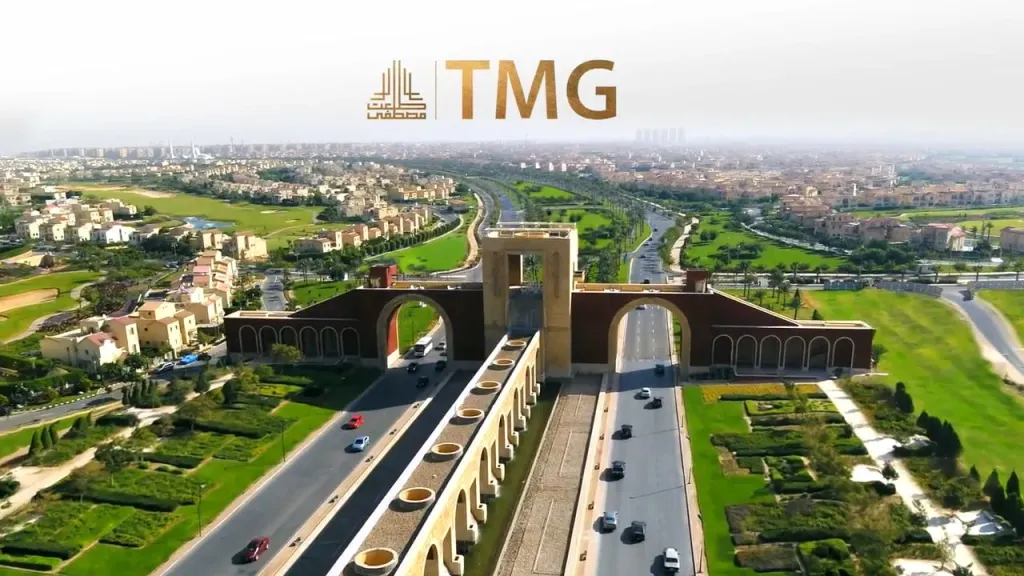
Talaat Moustafa Group Holding (TMG) is moving into a new phase of regional expansion across Saudi Arabia, Oman and Iraq, seeking to export the large-scale integrated community model that has underpinned its growth in Egypt and increasingly turn overseas markets into a significant source of real estate sales and recurring foreign-currency revenues.
The strategy marks a broader transformation for the Egyptian developer. Rather than relying primarily on its domestic land bank, TMG is building a multi-market development platform across some of the Middle East’s largest and fastest-changing property markets, using the same combination of residential communities, retail, hospitality, commercial space and recurring-income assets that has shaped projects such as Madinaty and Al Rehab.
Hisham Talaat Moustafa, CEO and Managing Director of TMG Holding, said the group intends to continue pursuing its regional expansion strategy in Saudi Arabia, Oman and Iraq, supported by a strong financial position, a conservative capital structure and its ability to replicate its integrated urban development model in markets offering significant growth potential.
The international push comes as TMG enters the second half of 2026 with considerable financial momentum. New contracted sales reached EGP 219.1 billion during the first six months of the year, while consolidated revenues rose 24% year-on-year to EGP 30.2 billion and net profit increased 23% to EGP 9.9 billion.
Saudi Arabia moves beyond Banan
Saudi Arabia represents the most established leg of TMG’s regional expansion, anchored by Banan, its first integrated urban development in the Kingdom. The project spans approximately 10 million square metres in Riyadh and combines residential development with commercial, retail and community infrastructure. TMG has already begun recognising revenue from Banan, moving the project from an expansion story into a contributor to the group’s financial performance.
The next phase is expected to broaden the revenue mix from the Saudi project. TMG plans to benefit from the rollout of Banan’s commercial and retail components, which could expand recurring income alongside residential sales as the community matures.
Its ambitions in the Kingdom, however, now extend beyond Banan. In June, Saudi Arabia’s Public Investment Fund and Talaat Moustafa Group Saudi signed a memorandum of understanding to explore cooperation on mixed-use developments across PIF-owned projects, spanning residential, commercial, hospitality, retail and integrated urban schemes.
The agreement potentially gives TMG access to a much broader pipeline in the Saudi market, combining the scale and investment ecosystem of PIF with the Egyptian developer’s experience in building and operating large master-planned communities. The non-binding framework remains subject to regulatory and internal approvals, but it signals that Saudi Arabia could become more than a single-project market for the group.
Oman adds two new growth platforms
TMG’s expansion into Oman has taken shape through Jood and Yamal, two major developments launched in partnership with Al Muhaidib Group. Together, the projects span more than 4.9 million square metres, comprise more than 15,000 residential and tourism units, and represent investments exceeding $5 billion.
Jood, located in Sultan Haitham City in Muscat, is designed as a sustainable smart community combining housing with educational, medical, commercial, recreational and sports facilities. Yamal, meanwhile, gives TMG exposure to a different segment of the market through a coastal destination on the Gulf of Oman featuring a 1,760-metre beachfront, marina, hotels and residential and tourism components.
The two developments demonstrate how TMG is adapting its integrated-community formula rather than simply reproducing identical projects abroad. In Oman, the strategy combines conventional urban development with tourism and waterfront assets, providing the group with opportunities to generate both property sales and longer-term recurring revenues.
Iraq becomes TMG’s largest regional development bet
Iraq represents another major step in the group’s geographical diversification. TMG secured an investment licence in May 2026 for a large integrated development in southwest Baghdad covering more than 12.8 million square metres, with preliminary studies estimating cumulative sales of about $18.8 billion.
The project is planned to include approximately 43,000 residential units and accommodate around 250,000 residents, alongside 2.3 million square metres of non-residential built-up space. The master plan includes retail, offices, hospitality, schools, healthcare facilities, entertainment, parks and a large sports and social club, effectively applying TMG’s city-building model on a new regional scale.
TMG estimates that the Baghdad development could generate around $108 million in annual recurring revenue once fully completed, primarily from leasing and hospitality assets. Development is expected to extend over roughly 16 years, with full sell-out targeted within about 12 years.
The project has also materially expanded the group’s land portfolio. Following the Iraqi allocation, TMG said its total land bank rose from about 115 million square metres to approximately 128 million square metres, while its regional land holdings reached around 28 million square metres, strengthening its exposure to foreign-currency-denominated property and recurring-income streams.
From Egyptian developer to regional city builder
The strategic importance of the three markets lies in more than geographic diversification. TMG is effectively attempting to turn a development model refined over decades in Egypt into an exportable regional business — one capable of generating sales, hospitality income, commercial rents and service revenues across several currencies and economies.
That transition is becoming increasingly visible in the group’s financial structure. Real estate development revenue climbed 34% year-on-year to EGP 17 billion in the first half of 2026, while other recurring revenues rose 24% to EGP 5.7 billion. The group also delivered 1,459 units during the period, more than double the number delivered a year earlier.
TMG is simultaneously expanding hospitality assets and other recurring-income businesses, creating a model in which the completion of residential communities can serve as the foundation for years of subsequent income from retail, leasing, hotels, clubs and services. The planned commercial components of Banan and the projects in Oman are expected to reinforce that strategy over the coming years.
For TMG, Saudi Arabia, Oman and Iraq are therefore becoming more than overseas extensions of an Egyptian property portfolio. They represent the foundations of a regional development platform designed to replicate the group’s integrated-city model at scale — and to make international markets an increasingly important driver of its next phase of growth.