
China to Deploy Robotic Dogs for Lunar Exploration and Permanent Base Construction by 2035
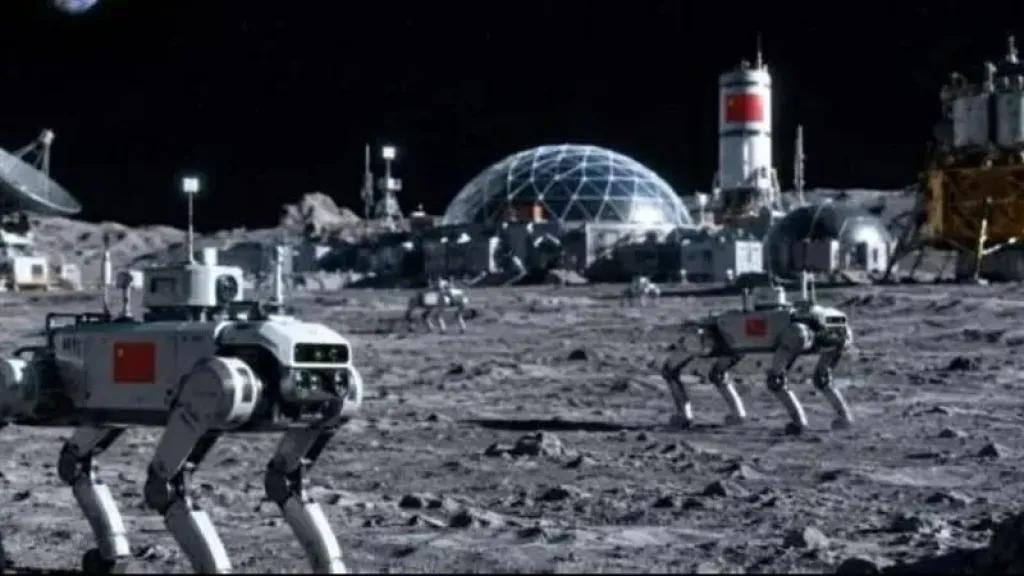
China is planning to employ smart robotic dogs to explore the lunar surface and assist in preparing the necessary conditions for establishing a permanent base on the Moon by 2035. This futuristic vision relies on a synergistic approach, integrating the cognitive capabilities of astronauts with advanced robotics to execute complex and hazardous tasks in the extreme lunar environment.
The Astronaut-Robot Synergy
The proposed mission model centers around a collaborative team consisting of three astronauts working alongside a fleet of smart machines. This structure is designed to manage lunar operations efficiently while minimizing human exposure to harsh conditions and potential risks.
The division of tasks is outlined as follows:
Team MemberPrimary Responsibilities
Astronaut 1Commands two robotic dogs to scout surrounding areas, navigate obstacles, and detect potential hazards.
Astronaut 2Focuses on on-site fieldwork, including collecting rock samples and conducting critical scientific experiments.
Astronaut 3Operates from a pressurized, truck-sized mobile rover, acting as a command center to coordinate operations and remotely control other robots as needed.
In this model, robots are granted a primary role in executing physical fieldwork, while astronauts retain full authority over decision-making and operational oversight. This aims to combine human analytical prowess with the robots' ability to operate autonomously for extended periods in highly dangerous environments.
Expanding the Role of Robotic Dogs
The potential tasks for these robotic dogs extend far beyond simple reconnaissance. In the future, they are expected to actively participate in:
Searching for natural resources, including water ice and valuable minerals.
Assisting ground teams in evaluating and mapping suitable sites for lunar facilities.
Preparing the Environment for Human Habitation
Furthermore, China seeks to utilize these robots to lay the groundwork for long-term human habitation. The robots will be tasked with:
Executing mining and resource extraction operations.
Preparing lunar lava tubes to serve as potential underground habitats.
Utilizing in-situ (local) lunar materials for the construction of infrastructure.
Overcoming Lunar Challenges
Relying heavily on robotics is part of a broader strategy to reduce the need for human intervention in the most perilous tasks. The lunar surface presents formidable environmental challenges, including:
Extreme temperature fluctuations.
High levels of space radiation.
The absence of an atmosphere.
Severe difficulties in mobility and prolonged physical labor.
Through this approach, China aims to gradually transition from short-term exploration missions to building a robust infrastructure capable of supporting a continuous human presence. By transforming robots from mere data collectors into active "mechanical workers," humans and machines will become true partners in space exploration, setting a primary blueprint for building human outposts beyond Earth.