
Egypt Signs Protocol with ”Sahel” to Facilitate Digital Payments and Utility Bills for Expats
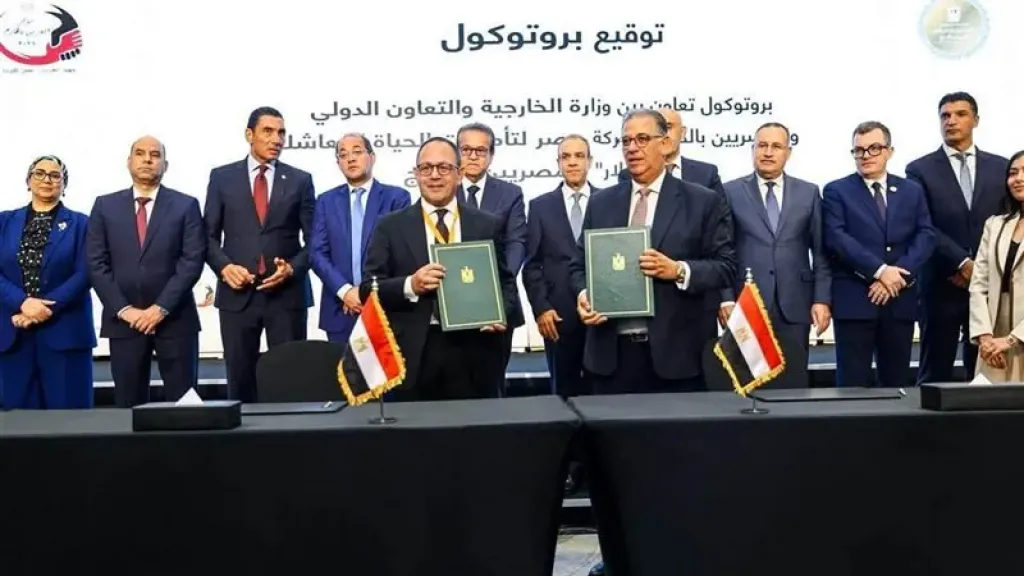
Dr. Badr Abdelatty, Minister of Foreign Affairs, International Cooperation and Egyptian Expats, alongside Dr. Ahmed Rostom, Minister of Planning and Economic Development, witnessed the signing ceremony of a cooperation protocol between the Ministry of Foreign Affairs and Delta Egypt for Payments, operating under the brand "Sahel"—a company in which the National Investment Bank holds a stake.
This move comes as part of the state's ongoing commitment to providing comprehensive support to Egyptians working abroad, facilitating their daily transactions, and strengthening their ties to the homeland.
Empowering Expats via Digital Solutions
The protocol aims to establish and implement an executive framework that allows Egyptian expatriates to seamlessly pay bills, financial obligations, public utility bills, and access various services through the "Sahel" mobile application and its digital platform, ensuring the highest levels of efficiency and security.
The signing occurred as part of a package of cooperation protocols concluded during the 7th edition of the Egyptian Expats Conference. Organized by the Ministry of Foreign Affairs under the slogan "No Matter How Far We Travel... Egypt Brings Us Closer" from August 2 to 3, 2026, the event was attended by several ministers, senior officials, parliamentary committee heads, and representatives of national institutions.
The protocol was officially signed by Ambassador Nabil Habashi, Deputy Minister of Foreign Affairs, and Major General Hazem Saafan, Chairman of Delta Egypt for Payments (Sahel).
Advancing Digital Transformation and Financial Inclusion
Dr. Ahmed Rostom, Minister of Planning and Economic Development, emphasized that digital transformation has become a fundamental pillar upon which the Egyptian state relies to modernize government services and improve citizens' quality of life. He highlighted the government's dedication to deploying modern technology to deliver more efficient and accessible services, ensuring they reach citizens both inside and outside Egypt. This aligns with the political leadership's directives to build a modern administrative apparatus centered on digitalization and smart services.
Dr. Rostom explained that this cooperation protocol reflects the integration of state institutions and national fintech companies to upgrade the services provided to expats. It empowers them to settle various financial commitments electronically, securely, and swiftly from anywhere in the world.
He further noted that Egyptian expatriates are key partners in the nation's development journey. Providing advanced digital services that meet their needs and foster continuous connection with their homeland reflects the state's drive toward accessible, interconnected government services. This approach resonates with the objectives of "Egypt Vision 2030," keeps pace with rapid digital transformation trends, and supports national efforts to enhance financial inclusion.
The Minister concluded by reaffirming the Ministry of Planning's commitment to continuous coordination and integration with various national entities, leveraging the comparative advantages of its affiliated institutions to support the path of comprehensive economic development.