ICT, Local Development Ministers Launch Public Shop Licensing Service via Digital Egypt Platform
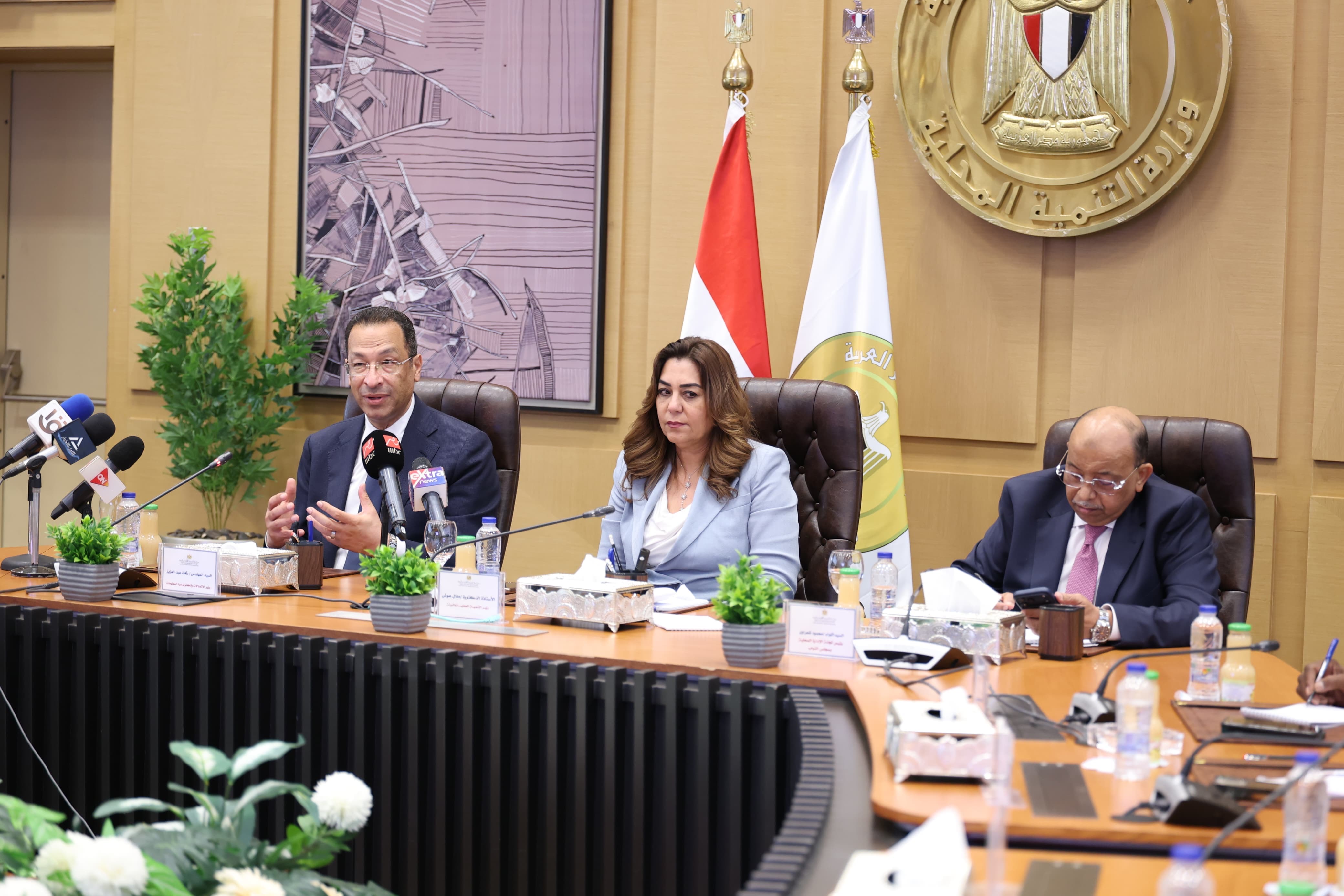
Minister of Local Development and Environment Manal Awad and Minister of Communications and Information Technology Raafat Hendy have announced the official launch of the Public Shop Licensing System on the Digital Egypt platform using the digital treasury system.
The system was jointly developed by the Ministry of Local Development and Environment (MLD), the Ministry of Communications and Information Technology (MCIT), and the Ministry of Planning and Economic Development to streamline licensing procedures for public shop owners.
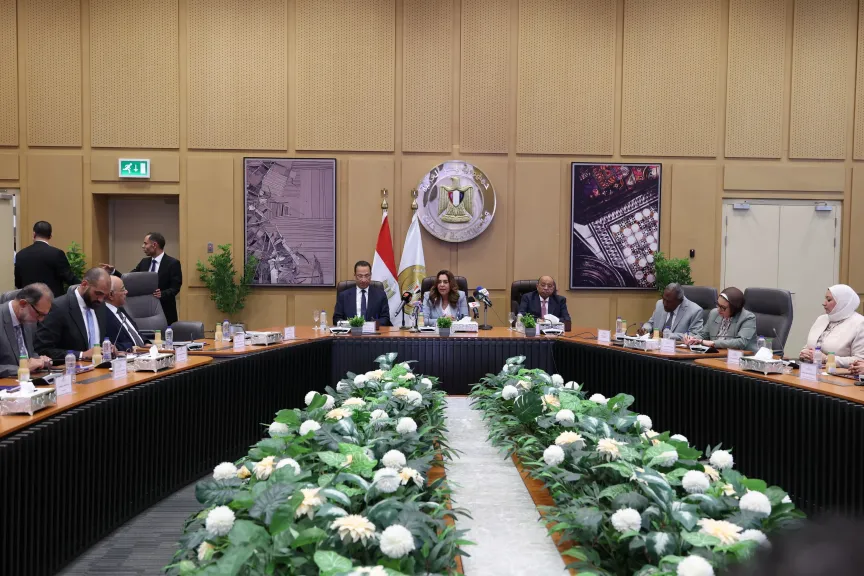
The launch ceremony was held at MLD's headquarters in the New Capital and was attended by Chair of the House of Representatives’ Local Government Committee Mahmoud Shaarawy, Deputy Chair of the Committee Mohamed Attia Elfayoumi, and several members of the House of Representatives. The ceremony was also attended by President of the Federation of Egyptian Chambers of Commerce (FEDCOC) Ahmed El-Wakil, representatives of the chambers of commerce, Chairman of the National Food Safety Authority (NFSA) Tarek El Houby, representatives and senior officials from MLD, MCIT, and the Ministry of Planning, and members of the Higher Committee for Public Shop Licensing and chambers of commerce.
In her opening remarks, the Minister of Local Development welcomed the ministers, members of the House of Representatives, media professionals, journalists, representatives of the chambers of commerce, and other participants. She stated that the event reflects the close cooperation among state institutions in launching the Public Shop Licensing System on the Digital Egypt platform, underscoring the political leadership's commitment to digital transformation, a more attractive investment climate, and easier access to government services.
The Minister of Local Development highlighted that the Higher Committee for Public Shop Licensing, since its establishment, has been responsible for regulating the licensing system, standardising procedures, and addressing challenges, with the aim of creating a more efficient, transparent, and equitable framework. She extended her sincere thanks to the former ministers who chaired the Committee for their tireless efforts in supporting and developing this framework.
Awad also stated that the government is now building on the outcomes of these efforts by transitioning to a new phase based on full digitization, electronic linking, and streamlined payment and settlement processes. This phase will help save time and effort, accelerate service delivery, and strengthen trust in government services.
The Local Development Minister encouraged public shop owners and investors to take advantage of the advanced platform, which was developed to provide a secure and efficient framework for formalizing and facilitating their business operations.
She further expressed her sincere appreciation to the Ministers of ICT and Planning, and all partner ministries and agencies for their dedicated efforts in bringing this project to life. She said the project represents a genuine example of effective collaboration among state institutions, helping to support the national economy, make life easier for citizens, and reinforce the principles of good governance and transparency in line with the aspirations of the New Republic.
Awad explained that the new system is designed to simplify procedures, speed up the license issuance process, accelerate digital transformation, support the transition to the formal economy, and support public shop owners and their investments. She added that the system also addresses several longstanding challenges by establishing a single entity to manage the entire licensing process, applying standardized procedures and criteria consistently nationwide, introducing a binding maximum timeframe for approvals, delivering fully digital services through the Digital Egypt platform, and allowing applicants to track the status of their requests in real time through a smart tracking system.
The Minister also highlighted that the new facilitations include the issuance of an immediate temporary operating permit for shop owners, allowing them to start their activities while the remaining approvals are being completed. The system establishes a maximum three-month deadline for securing approvals, ensuring that investors' procedures are finalised without delay. It also enables licences to be issued electronically to applicants and considers the failure of competent authorities to respond within the specified timeframe as implicit approval, in accordance with the applicable legal regulations.
Awad stated that the Public Shop Licensing System is designed to create integrated databases covering all public and commercial shops throughout Egypt. She noted that licensing fees have recently been standardized across all relevant entities, including the General Administration of Civil Protection of the Ministry of Interior, NFSA, and other involved authorities. She also thanked the Ministry of Interior for its continued support of the system and its decision to reduce service fees, noting that the Ministry has reduced the applicable fees by 50% in coordination with the participating entities.
She also emphasized that mobile notary public service units will soon be deployed more extensively to raise citizens’ awareness of the new system and enable them to apply for its services. She underscored the significant role of chambers of commerce in informing owners of shops operating without licenses about the new measures and facilitations.
Moreover, Awad added that commercial establishments located in buildings with legal violations (unlicensed) will receive temporary licences valid until the end of 2027 or until the building’s legal status is regularized and a reconciliation request is submitted. She noted that this deadline is set in accordance with Article 3 of the Public Shops Law.
The Local Development Minister further confirmed that the penalties stipulated under Public Shops Law No. 154 of 2019 will apply to unlicensed shops or those that fail to comply with licensing requirements. She added that local executive authorities in the governorates and the Ministry’s relevant sectors will conduct visits to commercial establishments to encourage owners to submit licence applications promptly, with mobile notary public service units available to facilitate the application process.
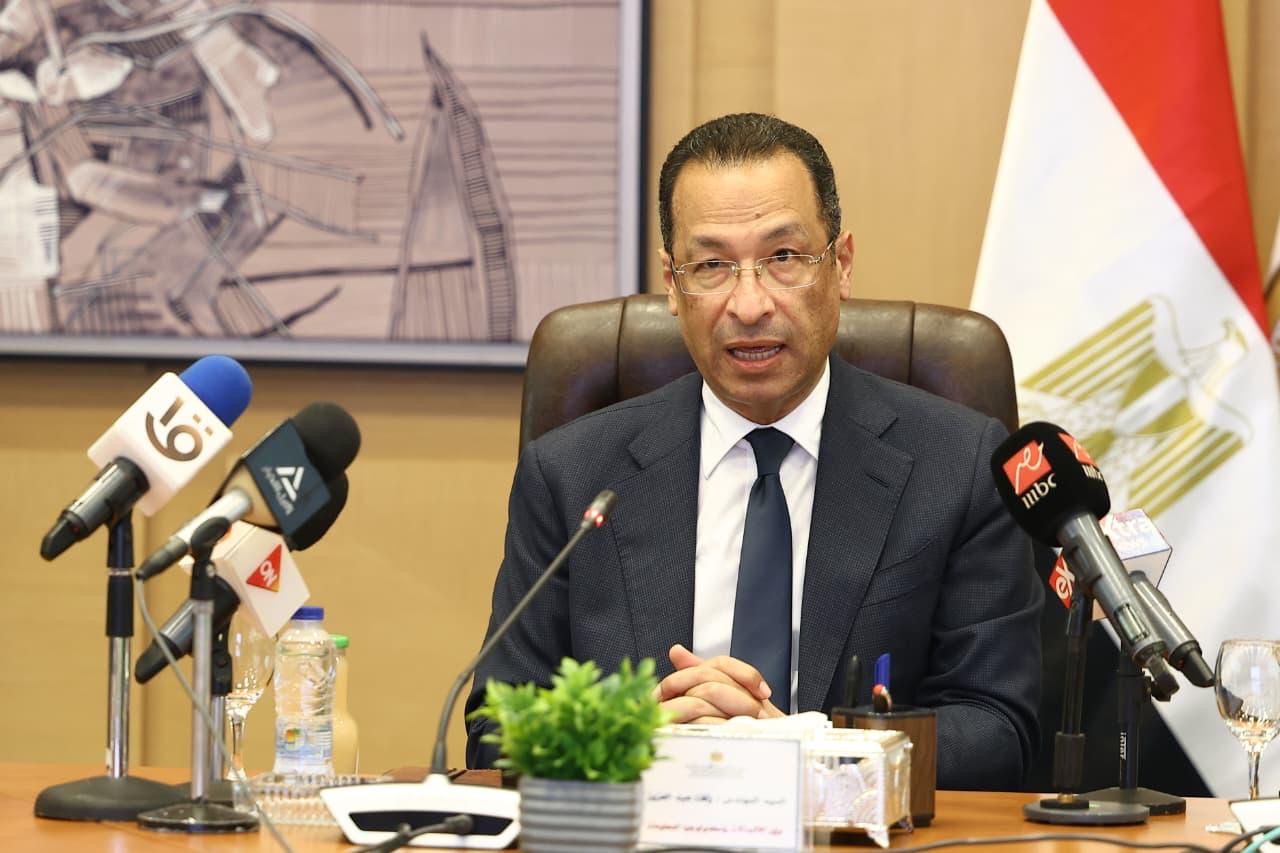
For his part, the ICT Minister expressed his pleasure at participating in the launching ceremony. He affirmed that this achievement reflects the effective collaboration and integration among state institutions in leveraging digital public infrastructure (DPI) to enhance government services.
The ICT Minister explained that in recent years, MCIT has prioritised the development of DPI and digital transformation enablers as the real foundation for the digital transformation. He noted that digital transformation is not achieved merely through delivering digital services, but rather through an interconnected digital government built on an integrated ecosystem that enables secure and reliable data exchange. In this context, MCIT has developed an integrated ecosystem comprising key enablers of modern digital government, including the government-to-government (G2G) system, digital identity, electronic signature, and the digital treasury system.
Hendy affirmed that the Digital Egypt platform has become the national one-stop shop for digital government services, offering more than 240 digital services to citizens and businesses, and serving over 12 million users. This demonstrates growing trust in digital services and the government’s success in building an integrated digital ecosystem, he explained.
As part of this integrated ecosystem, Hendy added, Egypt has successfully connected 105 government entities through the G2G system and enabled interoperability across more than 100 government databases, supporting secure, real-time data exchange in line with the highest standards of cybersecurity and data governance.
The ICT Minister said that introduction of the digital treasury system as a new enabler marks the beginning of a new phase in digital transformation. It enables government documents and records to be managed digitally, allowing citizens to securely retain, use, and share them digitally. Hendy highlighted the milestones underpinning this achievement, explaining that the Digital Egypt platform has already started delivering services based on the digital treasury system. The first service was the issuance of the electronic employment record certificate, enabling citizens to retain and use it without the need for a paper copy.
Hendy stated that the government has now entered a more advanced phase of digital service delivery, with the Public Shop Licensing System becoming the first government service to leverage the digital treasury to reuse verified digital documents. This puts the Once-Only Principle into practice, eliminating the need for citizens to repeatedly obtain or submit the same documents across government transactions.
In addition to improving the licensing system, the ICT Minister highlighted, the new system demonstrates the readiness of DPI to support services that strengthen collaboration between the government and the private sector, reinforcing the private sector's role in driving economic growth. He noted that the digital treasury reduces reliance on paper documents, raises service efficiency, enhances data quality, and improves the user experience. These advancements reflect the maturity of the Digital Egypt platform as an integrated digital ecosystem that enables a connected government driven by data rather than documents, and by integration rather than duplicated procedures.
Hendy announced that the next phase will focus on extending the digital treasury system to a wider range of government services to maximize the benefits of the national investment in digital infrastructure, enhance integration among government entities, and support the objectives of Egypt's digital transformation vision.
The ICT Minister concluded his remarks by expressing his sincere appreciation to MLD, the Ministry of Planning and Economic Development, FEDCOC, and all entities that contributed to this project, which serves as a successful model of cross-government collaboration and coordination among state institutions. He expressed his aspiration to leverage the chambers of commerce to raise awareness of the new system and encourage business owners to adopt it.
Hendy further emphasized that this milestone represents another step toward establishing a connected digital government and advancing the transition to a paperless government built on digitally verified documents and secure data sharing, thereby improving government performance and enhancing the experience of citizens and businesses.
For his part, Chair of the House of Representatives’ Local Government Committee Mahmoud Shaarawy expressed his sincere gratitude to the Minister of Local Development and the ICT Minister for inviting him to attend the ceremony. He commended the new licensing framework on the Digital Egypt platform, as well as the streamlined procedures and facilitations introduced to simplify the licensing process and save citizens’ time and effort. He emphasized the importance of integrating informal businesses into the formal economy and called for setting a deadline for shop owners to obtain the required licenses and enroll in the system.
Furthermore, FEDCOC President Ahmed El-Wakil commended MLD’s efforts to develop the new licensing system and integrate the informal sector into the formal economy. He stressed the need for the Ministry to disclose all fees and charges on the Digital Egypt platform and to prevent any entities participating in the system from introducing additional fees, helping establish unified procedures and encouraging shop owners to obtain licenses.
El-Wakil explained that the chambers of commerce will support small traders by raising their awareness of the platform and organizing awareness campaigns and informational sessions. He stressed the importance of public-private partnerships in providing greater support and facilitation for more than 5.4 million members of the chambers of commerce.
During the ceremony, the officials presented an overview of the Public Shop Licensing System launched on the Digital Egypt platform.