
Global Language Learning Platforms Market Projected to Hit $19.69 Billion by 2030, Powered by AI and Hybrid Education
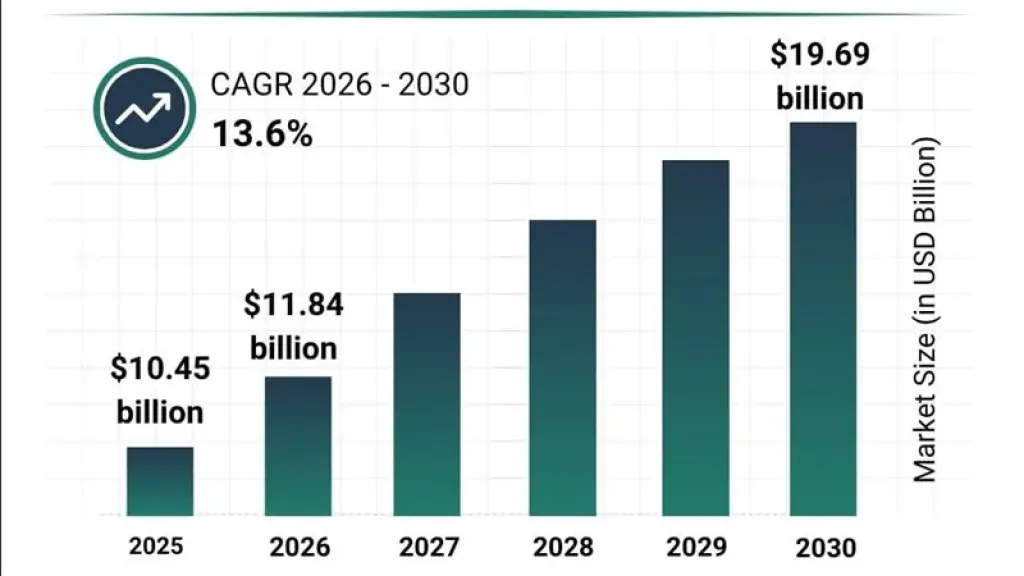
The global language learning platforms market is experiencing rapid expansion, fueled by the digital transformation of education, widespread integration of Artificial Intelligence (AI), and a surging demand for multilingual skills in corporate and academic environments. According to a comprehensive report by The Business Research Company, the market value is forecasted to reach $19.69 billion by 2030.
Market Value and Growth Metrics
Driven by globalization, cross-border connectivity, high smartphone penetration, and expanded internet access, the market is poised for strong consecutive growth.
YearMarket Value (USD)CAGR (Period)2025$10.45 Billion—2026$11.84 Billion13.3% (2025–2026)2030$19.69 Billion13.6% (2026–2030)
Key Drivers and Technological Shifts
The report attributes the historical and future growth of the market to several evolving educational and technological trends:
AI-Powered Personalization: The proliferation of adaptive learning systems that tailor curricula to individual student profiles and proficiencies.
Immersive Technologies: The incorporation of Augmented Reality (AR) and Virtual Reality (VR) to simulate real-world conversational environments.
Virtual Tutors and Speech Recognition: Increased deployment of AI-driven virtual instructors and advanced voice recognition tools designed to refine pronunciation and accents.
Flexible Monetization: A heavy consumer and corporate preference for flexible digital subscription models offering customized bite-sized modules.
The Role of E-Learning and Corporate Demand
Digital language platforms have moved past being auxiliary tools to become central pillars in remote and hybrid education. They provide structured coursework, live coaching, and automated assessment tools that enable flexible upskilling.
Corporate investment in employee language training is also rising significantly to foster global workforce mobility and support multinational operations. To illustrate the broader shift toward digital learning, the report cited data from Eurostat (the statistical office of the European Union), noting that 30% of internet users aged 16 to 74 in the EU engaged in online courses or utilized e-learning resources in 2023, up from 28% in 2022.
Geographic Landscape
North America: Maintained the largest market share in 2025, benefiting from an advanced digital infrastructure and rapid early adoption of educational technologies (EdTech).
Asia-Pacific: Anticipated to register the fastest compound growth rate over the coming years, propelled by expanding mobile connectivity and a highly competitive academic and corporate demand for foreign language proficiency.
The report concludes that the sector is becoming increasingly sophisticated, with developers utilizing advanced predictive analytics, market attractiveness indicators, and interactive trend dashboards to offer investors and enterprises precise insights into growth opportunities within the EdTech space.