
Samsung vs LG TVs: Which Brand Offers Better Picture Quality, Features and Value?
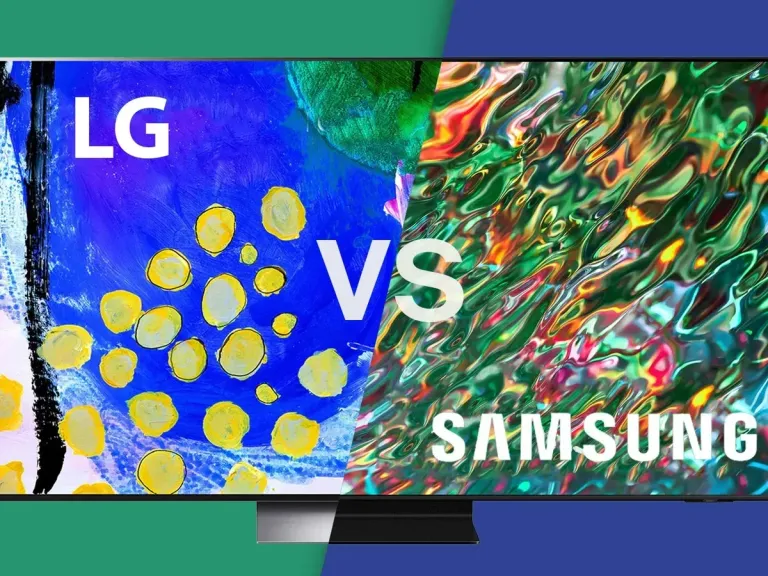
Choosing between a Samsung and an LG television depends largely on viewing habits, room lighting, gaming needs and budget, as both manufacturers offer strong models across entry-level, mid-range and premium segments.
LG is widely associated with OLED televisions, which use self-lit pixels to produce deep blacks, high contrast and wide viewing angles. This makes LG’s premium OLED models particularly suitable for watching films and series in dark or moderately lit rooms, where precise shadow detail and cinematic picture quality are key priorities.
Samsung, meanwhile, has built a strong position in QLED and Neo QLED televisions. These models typically deliver higher brightness levels and perform well in brightly lit living rooms, with vivid colors and improved resistance to reflections. Samsung’s premium Mini LED-based Neo QLED range is often better suited to daytime viewing and spaces with significant ambient light.
Both companies provide televisions designed for modern gaming, including selected models with 120Hz or higher refresh rates, HDMI 2.1 connectivity, Variable Refresh Rate and Auto Low Latency Mode. LG’s OLED panels offer extremely fast pixel response times, while Samsung combines strong gaming performance with features such as its Gaming Hub on supported models.
The two brands also use different smart television platforms. Samsung relies on its Tizen operating system, which integrates closely with the company’s Galaxy devices and SmartThings ecosystem. LG uses webOS, known for its straightforward interface and compatibility with the Magic Remote on selected models.
Sound performance varies between individual models rather than brands alone. Samsung offers features such as Q-Symphony, which allows compatible televisions and soundbars to operate together, while many LG premium televisions support Dolby Atmos and include sound-processing technologies designed to enhance dialogue and spatial audio.
Price remains one of the most important considerations. Samsung generally offers a broad selection of competitively priced QLED televisions in the mid-range category. LG’s OLED models usually command higher prices, although they may offer stronger cinematic performance for viewers who prioritize black levels and contrast.
For customers seeking the best picture quality for movies and gaming, an LG OLED television may be the more suitable choice. Those who need higher brightness, strong performance in well-lit rooms and a wider range of mid-priced options may find Samsung QLED or Neo QLED models more appropriate.
Ultimately, neither brand is universally better. The strongest choice depends on the specific model, panel technology, screen size and current price rather than the manufacturer’s name alone.