
Nokia Joins Finnish Alliance to Develop Advanced Counter-Drone Defense System
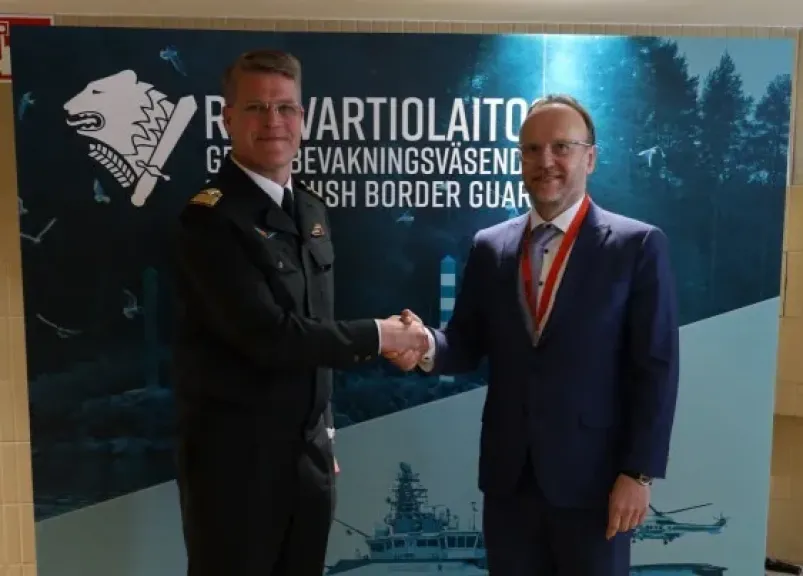
Nokia has officially announced that its subsidiary, Nokia Defense, has joined a new industrial alliance led by the Finnish Border Guard. The coalition is tasked with developing a fully integrated, independent national system to detect, track, and neutralize unmanned aerial vehicle (UAV) threats, aiming to secure Finland’s land and maritime borders and protect critical infrastructure.
Nokia’s Strategic Role
Nokia’s primary contribution to the alliance focuses on providing an advanced, high-performance smart communications infrastructure, ensuring:
Secure and Instant Connectivity: Enabling real-time data exchange across various operational platforms, including patrol vehicles, maritime vessels, sensors, and command-and-control centers.
Enhanced Decision-Making: Providing comprehensive, real-time situational awareness to accelerate the response time of security forces dealing with multi-domain threats.
Interoperability and Scaling: Collaborating with defense partners to build a unified, scalable network that meets Finland's strict national security requirements.
Project Timeline and Field Testing
The Finnish Border Guard’s project involves deploying experimental platforms and sensor networks to rigorously evaluate the new system's efficiency. The agreed schedule outlines:
2027: Commencement of field testing and operational evaluation for the newly developed counter-drone solutions.
Early 2028: Conclusion of the assessment phase, paving the way for official decisions regarding a large-scale, nationwide deployment.
Executive Insight
Mikko Hautala, Head of Geopolitical and Government Relations and Chairman of Nokia Defense, highlighted the critical nature of the project:
"Secure and reliable communications have become an essential component for defense and security organizations to rapidly detect, understand, and respond to fast-moving threats. Nokia’s contribution of smart connectivity and advanced sensing technologies will provide border authorities with the real-time awareness and operational flexibility needed to navigate complex environments on land and at sea."
This initiative aligns with a growing global trend among governments and security agencies to heavily invest in advanced drone-detection systems, countering the rapid proliferation and accessibility of potentially hostile unmanned aerial technologies.