
Exclusive Interview | Tarek El-Gioushy: New 6th of October City is an “Icon” of Fourth-Generation Cities.. And This Is Our Vision for Localizing Egyptian Industry
Hamdy Abdel Rashid
- Egypt possesses golden opportunities for industrial growth and sustainable development
- The government is working with a “one-team spirit” to eliminate all bureaucratic barriersIn light of the state's strategic direction toward urban expansion and sustainable industrial development, New 6th of October City has emerged as one of the most promising investment destinations among Egypt’s fourth-generation cities.
The city’s remarkable momentum would not have been possible without the efforts and collaboration of major industrial and real estate investors who laid the foundation for its growth. These include the National Investment Company (Sami Saad Holding), El Sewedy Industrial Development represented by Eng. Mohamed El Qammah, CEO of the company, Arabia Holding for Real Estate and Tourism Investment represented by Eng. Tarek Shoukry, Chairman of the Board, Polaris Parks Industrial Development represented by Basel Shoueira, Executive Director, as well as Tarek El-Gioushy, Chairman of El-Gioushy Steel Group and Founder of the New 6th of October Investors Association.
Overview of New 6th of October City
Area and Population Density:
The city spans approximately 78,100 feddans and is currently home to nearly 600,000 residents. This number continues to grow as new residential units are delivered. According to the government’s plan, the population is expected to reach around 5 million upon the completion of all development phases.
Strategic Location:
The city is situated along Al Wahat Road, extending from Kilometer 47 to Kilometer 72.
Geographical Boundaries:
North: El Dabaa Axis
East: Al Wahat Road and the Middle Ring Road
South: Cairo–Fayoum Desert Road
West: Regional Ring Road
Diversity of Uses:
The city includes residential, service, industrial, tourism, entertainment, and educational zones.
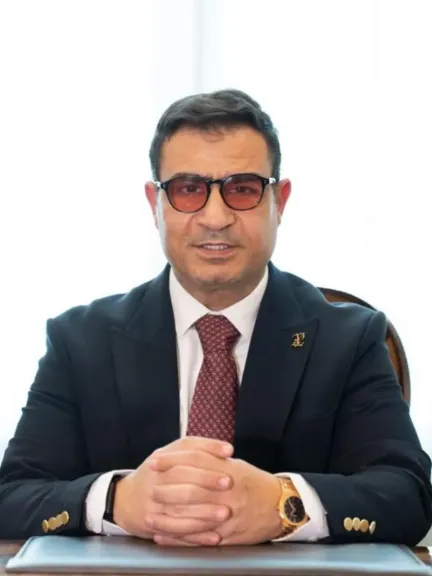
To explore the future of this promising city and the challenges facing Egypt’s industrial sector, we conducted this interview with Tarek El-Gioushy, Founder and Chairman of the New 6th of October Investors Association.
Q: To begin with, how do you view the future of New 6th of October City on Egypt’s investment map?
I believe the city possesses highly promising potential. It is not merely an urban extension but one of Egypt’s fourth-generation cities, planned and developed according to the latest international standards.
Today, we are witnessing unprecedented demand for both housing and investment in the city, reflecting the success of the state's vision for developing smart cities. These cities provide a practical solution to informal settlements, help reduce population congestion in the capital, and support balanced and comprehensive development across the country.
As the population grows, supporting services are also evolving rapidly, including transportation networks, utilities, commercial services, education, and healthcare. This positions the city as an integrated model for living, working, and investing.
"New 6th of October City is not just an urban extension; it is a comprehensive model for life and business. Its capabilities qualify it to become a major hub for attracting investments and deepening local manufacturing."
Q: What is your vision and strategy for developing the industrial sector within the city?
Our vision is centered around one key objective: creating integrated and interconnected industrial communities.
We seek to ensure that supply chains and various manufacturing stages are available within the city itself. This approach will reduce import dependency and significantly enhance the competitiveness of Egyptian products and industry as a whole.
Q: Tell us about the New 6th of October Investors Association and its role in the city's development.
The association includes a distinguished group of major industrial developers and investors who have committed themselves to supporting the city's establishment and development since its inception.
The association brings together leading industrial institutions and companies operating across various sectors. Our primary goal is to unify efforts to develop the city, promote its investment advantages, and attract more investments, ultimately creating a sustainable and integrated industrial community that serves the ambitions of the Egyptian economy.
Q: The “Chinese experience” is often cited as a model. What can New 6th of October City and its investors learn from it?
China undoubtedly represents a global success story in manufacturing. However, the key lesson is not simply importing technology, but rather embracing a culture of productivity, commitment to quality, and industrial localization.
I would also like to correct a common misconception regarding Chinese products. China possesses tremendous manufacturing flexibility and can produce according to the quality level and price specified by the customer. Therefore, quality is not a flaw in Chinese products; it is a direct reflection of contractual specifications.
What Egypt needs today is to focus on technology transfer, increasing local manufacturing content, and localizing diverse industries to meet domestic market needs first. This would then provide a strong foundation for expanding exports to global markets.
Q: How can the city strengthen its export capabilities in the coming period?
The city already possesses significant infrastructure and logistics capabilities that support exports, including specialized industrial complexes, modern logistics zones, and the dry port.
These assets play a crucial role in facilitating customs procedures and reducing both time and costs for investors and exporters, thereby enhancing the competitiveness of Egyptian products in international markets.
Q: In your opinion, what are the main challenges facing investors today?
Challenges are an inherent part of any investment process. What matters most is how they are managed and addressed.
One of the most important areas requiring continuous attention is the legislative and regulatory framework governing investment. Greater flexibility is needed to enhance the competitiveness of Egyptian industry and encourage investors to expand and inject new capital.
At the same time, I must note that we are currently witnessing substantial cooperation from the government and relevant ministries. There is a commendable shift toward field engagement, listening directly to investors’ concerns, and intervening swiftly to resolve obstacles.
Q: How do you assess the government’s recent performance regarding industry and investment?
Over the past years, tremendous efforts have been made to develop infrastructure, including roads, bridges, ports, and industrial zones.
This progress became particularly evident during the tenure of Lt. Gen. Eng. Kamel El-Wazir as Minister of Industry and Transport. His interventions played a pivotal role in accelerating project implementation and removing many bureaucratic obstacles that had negatively affected the industrial sector.
From this platform, I extend my sincere appreciation for his positive and rapid actions, which have laid a solid foundation for a new phase of growth.
Likewise, the effective coordination among ministries and the economic group contributes significantly to faster decision-making and a better investment climate, which directly boosts production, exports, and foreign currency inflows.
Q: Does the cost of financing (interest rates) remain the biggest obstacle to investment?
Financing costs are certainly a critical factor in any investor’s competitiveness calculations. However, there is another issue that may be equally, if not more, significant: the informal economy.
The presence of entities and factories operating outside the formal system creates unfair competition for serious investors who comply with taxes, insurance obligations, fees, legal requirements, and environmental standards.
Therefore, accelerating the integration of the parallel economy into the formal sector is essential—not only for ensuring fair competition but also for maximizing state revenues.
"Entities operating outside the formal system create unfair competition for compliant investors. Integrating them into the formal economy would generate shared benefits for the state and society alike."
Q: What is the roadmap for encouraging informal businesses to join the formal economy?
The solution requires a combination of reassurance and meaningful incentives.
Business owners must feel that joining the formal economy is not a burden but an opportunity that offers tangible benefits, including easier access to services, simplified procedures, financing opportunities, expansion prospects, and export channels.
The state has already taken serious steps in this direction by establishing industrial complexes for small and medium-sized enterprises and offering ready-to-operate industrial units of various sizes.
Nevertheless, greater awareness campaigns and trust-building efforts are still needed to reinforce the belief that joining the formal economy is a “win-win” formula that benefits the state, investors, and society as a whole.
Q: Finally, what message would you like to share?
I would like to express my gratitude to President Abdel Fattah El-Sisi and Prime Minister Mostafa Madbouly for their approach in the latest government formation, introducing young leaders with ambition and practical expertise.
Today, we clearly see a “one-team spirit” in government performance, with a genuine commitment to eliminating bureaucratic barriers among different entities and building upon the achievements already made.
My final message is one of optimism: Egypt possesses golden opportunities for industrial growth. We have the human resources, strategic location, and infrastructure needed to deepen local manufacturing, expand into international markets with Egyptian products, and achieve the sustainable economic development we all aspire to see.