
CBE Governor Hassan Abdalla and Tunisian Counterpart Discuss Monetary Cooperation and Financial Agility
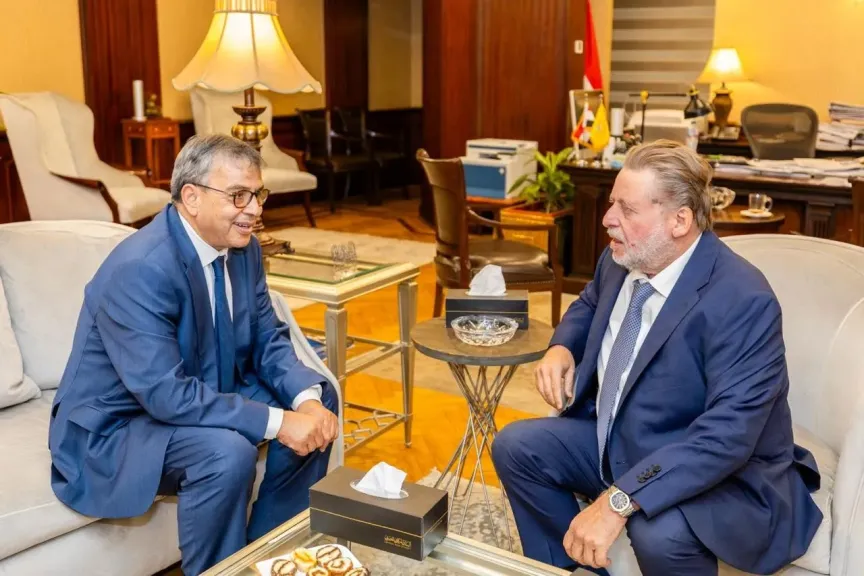
Hassan Abdalla, Governor of the Central Bank of Egypt (CBE), received Fethi Zouhair Nouri, Governor of the Central Bank of Tunisia, yesterday, Sunday, at the CBE headquarters to explore avenues of mutual cooperation between both banking institutions.
At the outset of the meeting, the CBE Governor welcomed his Tunisian counterpart to Egypt, praising the deep historical ties and fraternal relations uniting Egypt and Tunisia. He highlighted the continuous development of these relations across various levels, which significantly enhances economic cooperation between the two nations.
The bilateral discussions focused on mechanisms to strengthen cooperation between both central banks across all banking segments, within the framework of the Memorandum of Understanding (MoU) previously signed between the two parties, which includes the exchange of expertise in financial stability and monetary policy.
Furthermore, both governors reviewed prominent regional and international economic and financial developments. They evaluated the ongoing efforts of both central banks to navigate current global and regional geopolitical challenges, aiming to reinforce the banking sector's capacity to drive economic development plans and secure sustainable growth. Concluding the meeting, both parties underscored the importance of maintaining joint coordination and consultation over the coming period to bolster bilateral relations.
Notably, the MoU signed between the Central Bank of Egypt and the Central Bank of Tunisia back in September 2024 acts as a strategic blueprint to exchange experiences and expertise. This is executed through joint workshops, specialized training courses, conferences, and high-level technical meetings tailored to both parties' needs. The pact specifically targets financial stability, regulatory developments, exchange rate policies, and human resources. It also expands to settlement systems, payment services, financial inclusion, cash and liquidity management, statistical research, anti-money laundering and combating the financing of terrorism (AML/CFT), banking supervision, monetary operations, digitalization, and information security alongside cybersecurity networks.