
CAISEC 2026 Experts Warn Deepfakes Are Reshaping Digital Trust as Zero Trust Emerges as Key Defense Strategy
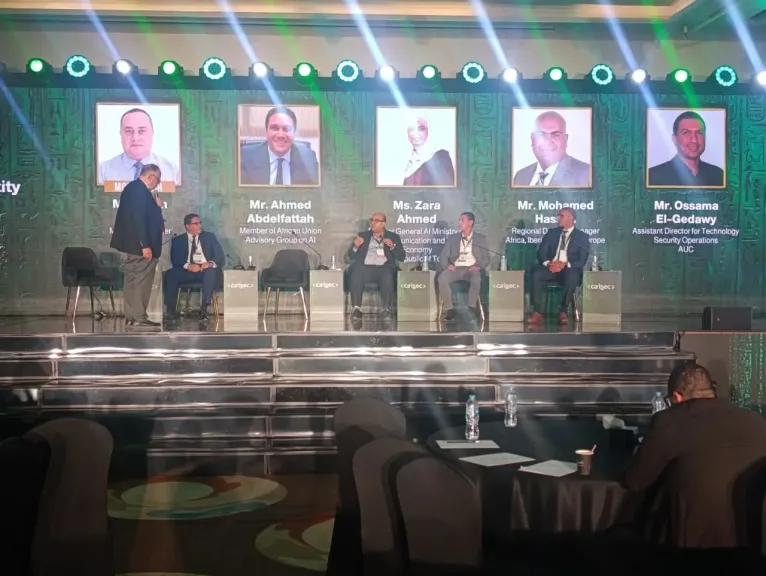
Cybersecurity and artificial intelligence experts participating in CAISEC 2026 warned that the rapid evolution of deepfake technologies is creating unprecedented challenges for digital trust, identity verification, and cybersecurity, calling for stronger governance frameworks, greater public awareness, and wider adoption of Zero Trust security models.
The discussion took place during a panel session focused on the future of deepfakes and AI-generated media, as organizations worldwide grapple with the growing impact of artificial intelligence on content creation and digital communications.
Moderated by Assem Galal, Managing Partner at G&K, the session brought together leading experts including Ahmed Abdel Fattah, Member of the African Union Artificial Intelligence Advisory Group; Mohamed Hassan, Regional Director for Africa, Iberia, and Eastern Europe at RSA; Osama El-Gedawy, Assistant Director of Technology for Security Operations at The American University in Cairo; and Khaled Yehia, Regional Cybersecurity Business Development Lead at Microsoft.
AI-Generated Content Becoming the New Normal
Khaled Yehia of Microsoft said a significant portion of the content circulating today on social media platforms, including advertising materials, is already being created entirely using artificial intelligence technologies.
He noted that AI-generated images, videos, and synthetic voices have become increasingly realistic, making it more difficult for users to distinguish authentic content from manipulated media.
“There is an ongoing race between deepfake detection technologies and the tools used to generate synthetic content,” Yehia said, adding that universities and technology companies are developing advanced solutions capable of analyzing content origins and determining whether materials were created by humans or AI systems.
He emphasized that public awareness remains the first line of defense against misinformation and digital deception, urging users to verify information through trusted sources before acting on any content or instructions encountered online.
Digital Verification and Transparency
Osama El-Gedawy highlighted growing international efforts to require organizations and content creators to label AI-generated materials, improving transparency and reducing the potential for misuse.
He explained that modern verification technologies increasingly rely on cryptographic signatures, metadata analysis, and digital provenance tools capable of tracing content origins and documenting modification histories.
“These mechanisms are expected to become fundamental components of future digital verification frameworks,” El-Gedawy said.
He warned that synthetic content is spreading at an accelerating pace while the tools required to create it are becoming more accessible, increasing the need for organizations to invest in detection technologies and continuous employee awareness programs.
Zero Trust as a Critical Defense Layer
Mohamed Hassan, Regional Director at RSA, stressed the importance of adopting Zero Trust principles when dealing with digital communications and information exchanges.
He explained that organizations must continuously verify the authenticity of messages, phone calls, instructions, and digital transactions before acting on them.
“The protection of digital assets is now just as important as the protection of physical assets,” Hassan said, noting that the growing reliance on digital information and personal data has significantly expanded cyber risk exposure.
Regulation Struggling to Keep Pace
Ahmed Abdel Fattah, a member of the African Union’s AI Advisory Group, warned that technological advancements are progressing far more rapidly than legislative and regulatory frameworks.
He said deepfake risks now extend beyond misinformation campaigns to include fraud, identity theft, impersonation, and sophisticated social engineering attacks.
According to Abdel Fattah, modern deepfake manipulation often involves altering only small portions of otherwise legitimate content, making detection increasingly difficult.
“There is currently no technology capable of verifying digital content with 100 percent certainty,” he said.
The Future of Trust in the AI Era
Concluding the session, Assem Galal noted that many intelligent platforms are increasingly relying on cross-referencing information against multiple trusted sources rather than analyzing content in isolation.
He argued that combating deepfakes and synthetic media will require a combination of advanced technology, public awareness, and adaptive regulatory frameworks capable of keeping pace with rapidly evolving AI capabilities.
Participants agreed that protecting digital trust in the age of artificial intelligence demands close collaboration among governments, technology companies, academic institutions, and civil society organizations, alongside broader adoption of digital verification practices and cybersecurity awareness initiatives.
The discussion formed part of CAISEC 2026, one of the region’s largest cybersecurity gatherings, where experts continue to examine the impact of artificial intelligence, digital sovereignty, cyber resilience, and emerging security threats across Africa and the Middle East.