
Egypt adopts a comprehensive vision to build a safe digital space. We continue to implement the second edition of the National Cyber Security Strategy
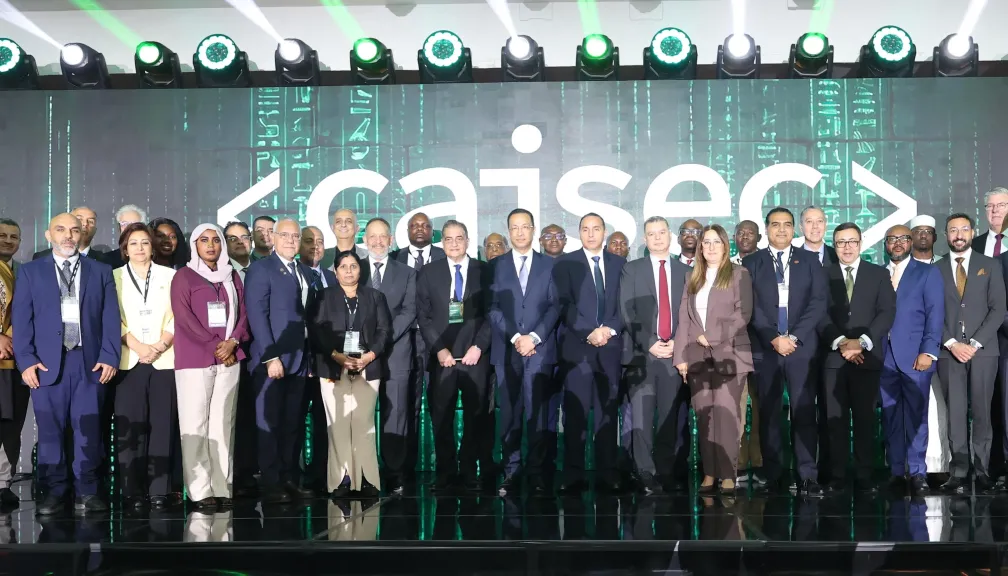
Eng. Rafat Hindi, Minister of Communications and Information Technology, stressed that Egypt adopts a comprehensive vision for building a safe digital space, integrating policy development, enhancing technical readiness, developing human competencies, and supporting innovation, pointing out that the state, through the institutional framework of the Supreme Council for Cybersecurity, continues to implement the second edition of the National Cyber Security Strategy (2023-2027), which represents an integrated digital framework to enhance the protection of digital infrastructure and raise the levels of readiness and response, adding that preliminary work has been initiated to prepare for the third edition of the strategy to keep pace with the accelerated global developments, and prepare for the challenges and opportunities imposed by modern technologies.
This came in the speech of Engineer Rafat Hindi during his participation in the opening session of the fifth session of the caisec'26 Information Security and Cybersecurity Conference and Exhibition, which will be held on June 8 and 9 under the auspices of the Prime Minister Dr. Mustafa Madbouly, and with the support of 10 ministries. The conference is organized by Mercury Communications under the theme: "Protecting the Future: Insurance against the Unknown" with the participation of more than 180 speakers and more than 5,000 participants from 22 countries.
At the beginning of his speech, Eng. Rafat Hindi thanked and appreciated the organizing authorities and participating partners, praising their success in providing a platform that brings together decision makers, experts, researchers, representatives of the private sector and academic institutions from different countries to discuss an issue that has become one of the main pillars for the sustainability of the digital economy and enhancing confidence in the digital environment.
Engineer Rafat Hindi explained that digital technology has become an authentic and pivotal reality in the structure of modern economies and the working mechanisms of governments and societies, stressing that data has become the most important element in producing economic value, supporting innovation, and decision-making; pointing out that cybersecurity issues are no longer limited only to protecting systems and networks, but have become closely related to protecting trust in the digital economy, ensuring the continuity of services, preserving digital assets and enhancing the ability of countries to manage their data and digital structure efficiently and safely.
Engineer Rafat Hindi stressed that the protection of technological structure and digital capabilities is at the heart of the national security issues of countries, explaining that digital sovereignty has emerged as one of the main components of protecting national interests and enhancing readiness for the future to ensure the continuity of vital services and the efficiency and reliability of digital services.
Engineer Rafat Hindi added that just as roads, ports and airports have formed the arteries of the traditional economy for many decades, data centers represent today one of the most important arteries of the digital economy for the capabilities they provide for hosting data, providing digital services and supporting artificial intelligence and computing applications. He stressed that Egypt continues its efforts to strengthen its position as a regional center for digital data and services through the development of digital infrastructure, encouraging investments in data centers and cloud computing to contribute to supporting digital sovereignty and enhancing national readiness for the requirements of the digital economy.
Engineer Rafat Hindi touched on the challenges and opportunities imposed by emerging technologies, led by artificial intelligence and quantum computing, pointing out that while artificial intelligence applications contribute to enhancing monitoring and response capabilities to cyber threats, quantum computing poses future challenges related to encryption systems, data protection and digital assets. From this point of view, the competencies of the National Council for Artificial Intelligence have been developed to become the National Council for Artificial Intelligence, Quantum Computing and Emerging Technologies, in order to foresee and prepare for future technical transformations and maximize the opportunities they offer.
He stressed that the state is working to raise the levels of technical readiness in various vital sectors and enhance its capacity to prevent, respond and recover from cyber threats; pointing to the adoption of 45 companies as cyber security service providers, within the framework of the state's interest in developing the cybersecurity market and supporting national companies working in this field, which contributes to raising the quality of services and enhancing confidence in the Egyptian market.
Engineer Rafat Hindi stressed that the human element is the cornerstone in the digital security system, reviewing national initiatives for capacity building and professional accreditation paths for specialists, foremost of which are the initiatives of "Digital Generations of Egypt", "Digital Pioneers", "Cybersecurity Academy for Youth" and "Mahara Tech" platform, stressing that the modern concept of cybersecurity puts man at the heart of the digital protection system, pointing out the ministry's launch of the "Wawa'a" platform. Net in cooperation with the National Council for Childhood and Motherhood and the United Nations, to promote awareness of digital citizenship and online safety, and support community awareness efforts on the practices of safe and responsible use of technology among children, youth and various segments of society.
Engineer Rafat Hindi concluded his speech by stressing that the transboundary nature of the digital space makes international and regional cooperation an indispensable necessity, as there is no country or institution capable alone to face cyber challenges or keep pace with the rapid technological developments, stressing Egypt's full commitment to continue working together with its regional and international partners in order to enhance cybersecurity, consolidate digital sovereignty and prepare for future technologies, pointing out that the future cybersecurity will not be built with technical solutions alone, but by effective partnerships, exchange of experiences, investment in people, and continuous readiness for the opportunities and challenges that technology carries.
In his speech, Mr. Osama Kamal, Chairman of the Board of Directors of Mercury Communications, the organizer of the CAISEC 2026 Conference and Exhibition, said that technology was once an independent sector, but today it has become the main catalyst and infrastructure for all sectors. He added that the CAISEC Cyber Security Conference was launched five years ago, specifically in 2022, in conjunction with the Russian-Ukrainian crisis and the subsequent repercussions that directly affected the cybersecurity system globally.
Mr. Osama Kamal stressed that the digital sovereignty of Arab and African countries is no less important than sovereignty over land and airspace, which requires keeping abreast of all the rapid developments in the fields of cybersecurity and information security. He explained that these issues will be at the forefront of the topics to be discussed by the CAISEC 2026 conference and exhibition during its fifth session.
The opening session of the conference witnessed the participation of a number of senior regional and international officials and experts, including Brigadier General Ahmed Mohamed Anani on behalf of General Ashraf Salem Zaher, Minister of Defense and Military Production, Dr. Sherif Hazem, Deputy Governor of the Central Bank of Egypt for Cybersecurity, Dr. Islam Azzam, President of the Financial Supervisory Authority, Dr. Jan Elsberger, Director General of the European Telecommunications Standards Institute, Dr. Devine Selassie Agbeti, Director General of the Cyber Security Authority in Ghana and President of the African Network of Cybersecurity Authorities, Mr. Lasina Kony, Director General and CEO of Smart Africa and Mr. Mohamed Ben Omar, Director General of the Arab Organization for Communication and Information Technologies.
Also participating in the leadership of the Ministry of Communications and Information Technology, Ms. Dalia Al-Baz, Chairman of the Board of Directors of the National Postal Authority, Eng. Ahmed Al-Zaher, CEO of the Information Technology Industry Development Authority (ITIDA), and Dr. Ahmed Khattab, Director of the National Telecommunications Institute.
The conference also witnessed a wide participation from the leaders of major international and regional technology companies, including Mr. Mohamed Amin, First Vice President for the Central and Eastern Europe, the Middle East, Africa and Turkey at Dell Technologies, Mr. Ibrahim Sarhan, Chairman and Executive Member of E-Finance Group for Financial and Digital Investments, Mr. Mohamed Al-Mufti, CEO of ICT Egypt, Mr. Mohamed Kamel, General Manager of Cisco Egypt, Mr. Bishoy Wasfi, Director of Information Security at Sychild, and Mr. Khaled Fawzi, Regional Director of Fortinent in Egypt, Libya and Sudan.