
Egyptian Gold Prices Dip Slightly Amid Global Decline and Surging US Dollar
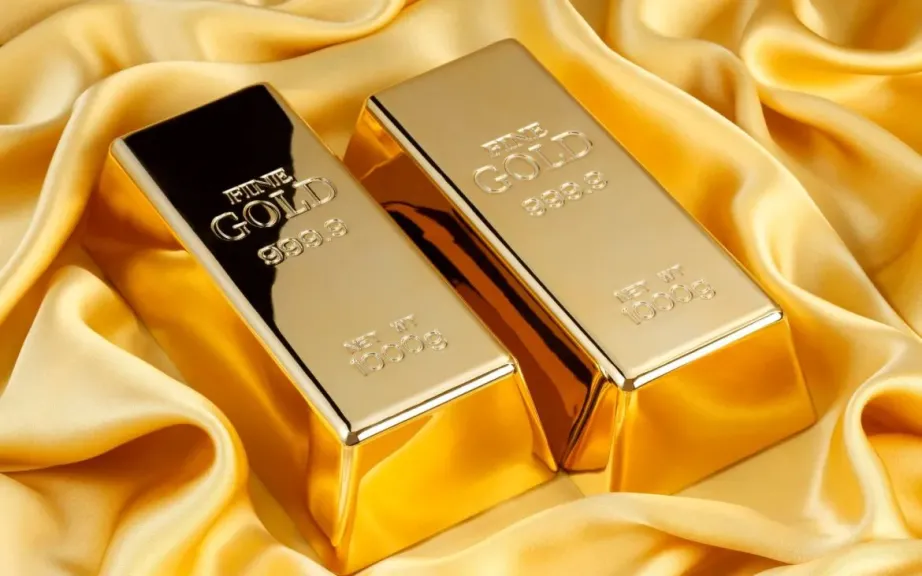
Egyptian gold prices experienced a slight decline during Tuesday’s trading session, driven by a drop in global spot prices, persistent pressure from a strengthening US dollar, and rising bond yields. However, ongoing geopolitical tensions in the Middle East continue to provide some support to the precious metal, according to a report by iSagha, an online gold and jewelry trading platform.
Domestic Price Breakdown The 21-karat gold, the most heavily traded caliber in Egypt, fell by EGP 25 (0.36%), dropping from EGP 6,875 to EGP 6,850 per gram. Meanwhile, the 24-karat gold was recorded at EGP 7,806 per gram, and the 18-karat gold reached EGP 5,854 per gram. The gold coin (Ginei) was priced at EGP 54,640, while the global spot price stood at $4,508 per ounce.
Saeed Embabi, CEO of iSagha, stated that current gold movements reflect a state of cautious balance within the markets, amid a clear conflict between supporting and pressuring factors. He noted that ongoing Iranian tensions and geopolitical fears support the demand for gold as a safe haven. On the other hand, the strength of the US dollar and rising real bond yields continue to press prices downward globally. Embabi added that the Egyptian market is moving relatively balanced, pointing out that the limited price decline reflects the absence of sharp selling pressures or aggressive buying waves domestically.
US Dollar Pressures Domestic Market The iSagha report indicated that the US dollar exchange rate against the Egyptian pound rose to EGP 52.28 during the May 25 sessions, a 0.11% increase compared to the previous session, which raised the cost of importing raw gold into the local market.
Embabi explained that the rising exchange rate represents a primary pressure on gold prices in Egypt by increasing basic import costs. However, he noted that weak domestic purchasing power limits the market's ability to record sharp gains. He added that the dollar's movement last week witnessed clear fluctuations, fluctuating between EGP 52.87 and EGP 53.47, directly impacting gold pricing locally.
Price Gap Reflects Market Stability The report confirmed that the price gap between the local price and the equivalent global price stood at approximately EGP 155.23, representing 2.31% of the global price. The report described this gap as "moderate," reflecting import costs, operational margins, and risks associated with the domestic market. Embabi pointed out that the stability of the current price gap reflects relative efficiency in local pricing, emphasizing that the market is not experiencing extraordinary pressures on profit margins or major disruptions in supply and demand.
Globally, gold prices fell following a wave of strong gains, as the ounce dropped from $4,569.86 to $4,534.86 amid a corrective trend driven by the stronger US dollar and rising bond yields. Spot gold fell 0.7% to $4,537.54 per ounce, while US gold futures for June delivery rose 0.3% to $4,538.50. Embabi explained that global markets have begun repricing gold according to the "opportunity cost" concept, with rising real yields on US bonds reducing the attractiveness of gold as a non-yielding asset.
UBS Report: Markets Re-evaluate Gold The iSagha report noted that UBS analysts confirmed gold faces increasing pressure since the outbreak of the US-Iranian war, driven by rising oil prices and heightened inflationary fears. This situation prompts global central banks, led by the US Federal Reserve, to keep interest rates higher for longer. The report explained that the inverse relationship between gold and US real yields has re-emerged strongly in recent months, as investors shift toward money market instruments and high-yield bonds.
Embabi added that the strength of the US dollar is one of the most prominent current pressures on gold, especially after the US Dollar Index rose by 1.3% over the past three months, making gold more expensive for non-US buyers.
Central Bank Purchases Support Gold Despite current pressures, the iSagha report stressed that supporting factors still grant gold some strength, most notably the continuous purchases by global central banks, which rose by 17.35% to reach 243.7 tons during the first quarter of 2026. The report also pointed to a 6.05% decline in global gold supply to 1,230.9 tons, resulting from an 8.64% drop in mining production, which creates a relative balance between global supply and demand.
In contrast, demand for gold jewelry fell by 31.41% to 299.7 tons, and ETF investments plummeted by 64.55% to just 62 tons, as investors shifted toward high-yield assets.
Iranian War Keeps Markets on High Alert The report emphasized that ongoing military operations and tensions related to the Iranian file remain a significant support element for gold prices, despite the state of anticipation dominating the markets regarding political settlement opportunities. Embabi noted that recent US strikes inside southern Iran, targeting missile launch sites and naval boats, renewed fears over global oil supply stability, supporting crude prices and raising global inflation expectations. He added that markets are increasingly anticipating the US Federal Reserve's decisions, especially with rising probabilities of another interest rate hike this year.
Gold Price Forecasts Embabi explained that the global market is currently moving within a sideways range with a slight downward bias, due to the balance between geopolitical support and monetary pressure from the strong dollar and US yields. He stressed that the short-term trend for gold will remain tied to the developments of the Iranian crisis and the path of US monetary policy, noting that investors currently prefer to wait until clearer signals emerge regarding the future of interest rates and dollar movements.
Embabi concluded his remarks by confirming that the Egyptian market remains relatively stable and that the current price gap reflects fair pricing. However, he stressed that any sharp movements in gold prices will remain dependent on global developments in the coming weeks.