
Tech Titans Left Empty-Handed in Beijing: Why Trump’s China Summit Failed to Yield Major AI Deals
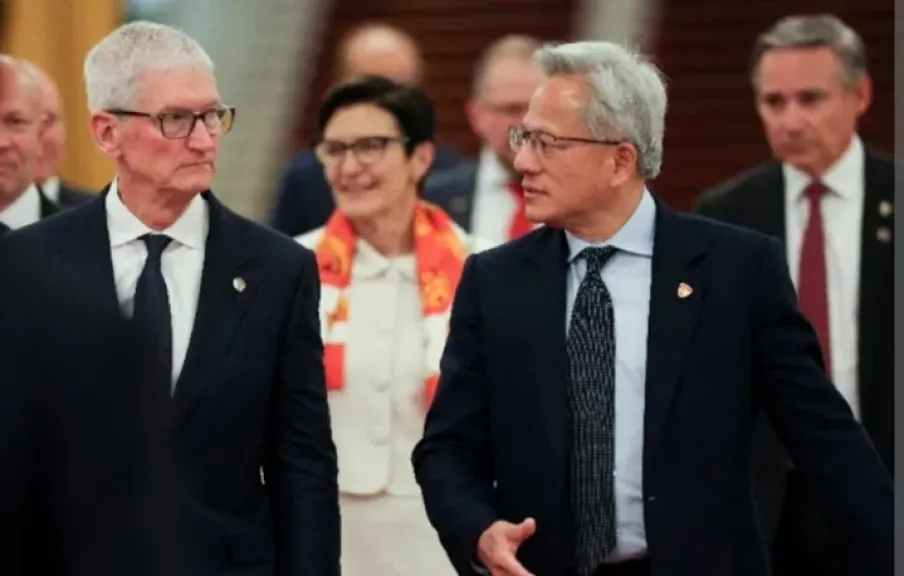
Despite high-profile receptions and top-tier access to Chinese officials, the highly anticipated corporate summit in Beijing concluded without breaking the economic deadlock between the world's two largest economies. Accompanied by U.S. President Donald Trump, an elite delegation of American CEOs—including Jensen Huang of NVIDIA and Tim Cook of Apple—failed to secure definitive regulatory breakthroughs or major commercial contracts. The outcome highlights the deepening friction in the global technology sector, where national security concerns consistently overshadow corporate expansion goals.
The most critical setback involved NVIDIA's ongoing efforts to expand sales of its specialized H200 AI chips within the Chinese market. Despite Huang’s personal diplomacy, Beijing maintained its cautious stance, leaving the tech giant stuck in a regulatory gray zone. Similarly, Boeing's anticipated mega-deal was downsized to a modest framework for 200 aircraft—far below historical benchmarks. Analysts observe that while the summit succeeded in cooling geopolitical rhetoric and rebuilding basic communication channels, it exposed a harsh reality: in 2026, tech sovereignty and supply-chain decoupled strategies are preventing a return to unrestricted trade.