
Redefining Regional Growth: Counselor Hany Abu Zeid on Tech-Driven Stability and Cross-Border Cooperation
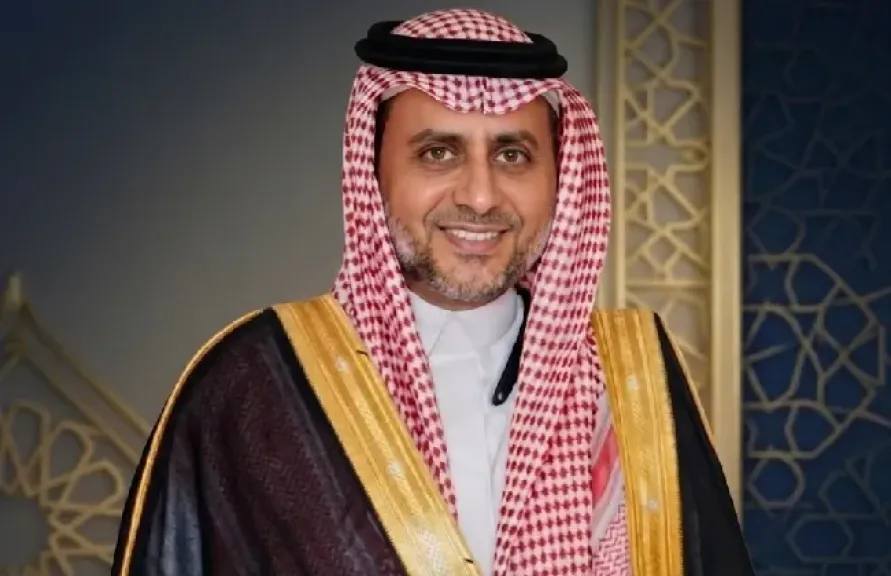
"In an era marked by shifting geopolitical landscapes and economic uncertainty, we sat down with Counselor Hany Abu Zeid, Head of the Supreme Council for Arab-African Economy. With his dual perspective as an economic leader and a member of the 'TechnoTime 2025' Board of Trustees, Abu Zeid shares his roadmap for navigating current crises through regional integration and technological agility."
Geopolitics & Economic Stability
Q: "Amidst the current geopolitical tensions and the instability surrounding regional security, how do you assess the impact on Arab development agendas, and what concrete mechanisms are required to immunize these trajectories against external shocks?"
A: "These tensions represent a stress test for our regional economic models. They directly impact supply chains and energy markets. However, they also serve as a wake-up call, mandating a transition toward a more autonomous and resilient economic vision. At the Council, we believe the path to immunity lies in a comprehensive integration package: strengthening food and energy security, scaling intra-Arab and African trade, and fostering joint financing mechanisms. We must shift from external dependency to regional integration as a strategic imperative."
Tech as a Safety Valve
Q: "As a Board Member of the ‘TechnoTime 2025 Excellence Awards,’ how do you perceive the role of institutional innovation as an economic safety valve? Can technological excellence bridge the gaps widened by international crises?"
A: "Technological innovation has evolved from a competitive edge into a fundamental pillar of economic security. Institutions that prioritize digital transformation demonstrate significantly higher agility during crises. Innovation allows us to optimize productivity, penetrate new markets, and create solutions for complex challenges. Initiatives like 'TechnoTime' are vital; they cultivate a culture of foresight, encouraging firms to move beyond reactive survival and toward proactive future-readiness."
The Private Sector’s Role
Q: "You have long advocated for the private sector as a cornerstone of growth. In today’s climate of global uncertainty, how can we catalyze the private sector to lead the development engine despite these heavy geopolitical pressures?"
A: "The private sector is the engine of any dynamic economy. To empower it, we must redefine its role as a strategic partner in economic decision-making. We need a stable, transparent business environment, coupled with innovative financing tools that facilitate growth. Supporting Small and Medium Enterprises (SMEs) remains our top priority, given their inherent flexibility. When empowered correctly, the private sector does more than just survive—it transforms challenges into growth opportunities."
Arab-African Integration
Q: "Does the current crisis present a catalyst for deeper Arab-African integration, potentially forming an economic bloc capable of greater self-sufficiency and geopolitical leverage?"
A: "Absolutely. Crises often force the recalibration of economic alliances. We view this phase as a strategic opening. There is a natural complementarity between our regions: Africa provides vast natural and human resources, while the Arab world offers investment expertise and developed infrastructure. By aligning these advantages, we can build a robust economic bloc. We are actively pushing for joint projects in food security, energy, and logistics as the foundations for long-term regional stability."
Future Outlook & The 'Arab Exception'
Q: "Looking ahead to 2026, what is your message to policymakers and young innovators? How do we build a successful 'Arab Exception' in such a volatile international environment?"
A: "The current era demands a new strategic awareness rooted in human capital and innovation. My message to policymakers is simple: build strong economies by empowering young minds and fostering environments that nurture creative initiatives. To the youth: do not wait for ideal conditions—create opportunity out of challenge. The 'Arab Exception' we strive for will be built on three pillars: genuine regional integration, a knowledge-based economy, and effective governance. By mastering these, our region will cease to be a bystander to crises and become a manufacturer of opportunity."