
Fitch: Port Operators in EMEA Poised to Weather Potential Strait of Hormuz Disruptions
Fitch Ratings Fitch Ratings reported that most port operators across Europe, the Middle East, and Africa (EMEA) maintain comfortable safety margins, enabling them to withstand potential disruptions such as a complete closure of the Strait of Hormuz. The overall impact is expected to remain limited to moderate, supported by global diversification and strong financial positions.
The agency highlighted that UAE-based operators, including DP World and AD Ports Group, are closely tied to regional trade flows. Yet, their international presence and operational flexibility make them well-prepared for shocks.
Jebel Ali: A Strategic Hub
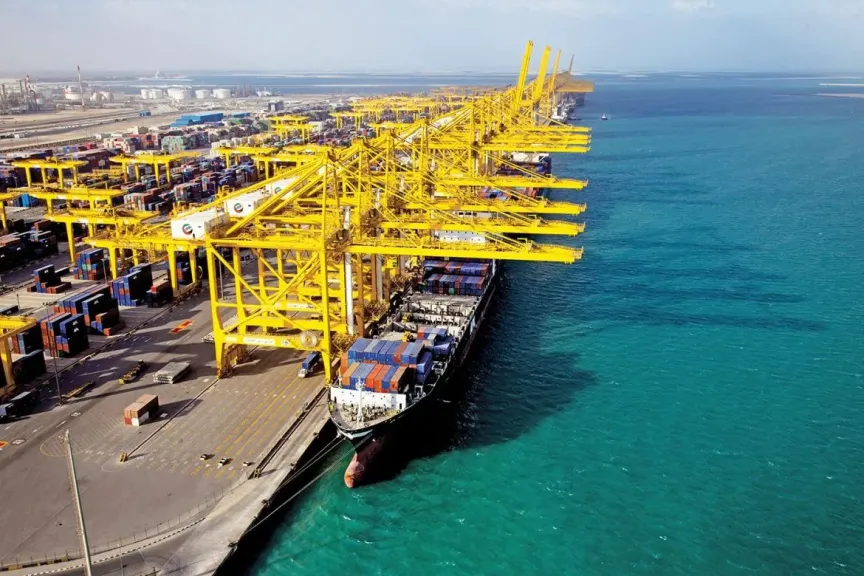
Jebel Ali Port accounts for approximately 27% of DP World’s total throughput. Fitch noted that a potential Strait of Hormuz closure could reduce origin and destination shipments, though transit traffic may partially offset this by rerouting cargo to alternative ports.
DP World could also benefit from increased storage revenue due to delayed shipments, while its cost structure—heavily weighted toward variable expenses of 70–75%, with fuel at just 5%—allows rapid operational adjustments.
Financial Resilience
DP World’s liquidity remains robust, with cash reserves of $4.4 billion at the end of 2025, alongside unused credit facilities, strengthening its ability to absorb financial pressures. Similarly, AD Ports Group maintains a strong financial position, supported by its credit rating linkage to the Abu Dhabi government, which is expected to sustain budget surpluses even under challenging economic conditions.
Revenue Diversification and Government Support
Fitch noted that AD Ports’ domestic operations are likely to continue with limited maritime disruption, supported by stable revenue sources such as concession fees at Khalifa Port and transit growth opportunities. Government support further mitigates operational risks, complemented by $750 million in cash and $1 billion in credit facilities extending to 2029, with minimal near-term debt obligations.