
Walid Hassouna: valU Executes 40,000 Transactions Daily and Redefines Practical AI Adoption in Egypt
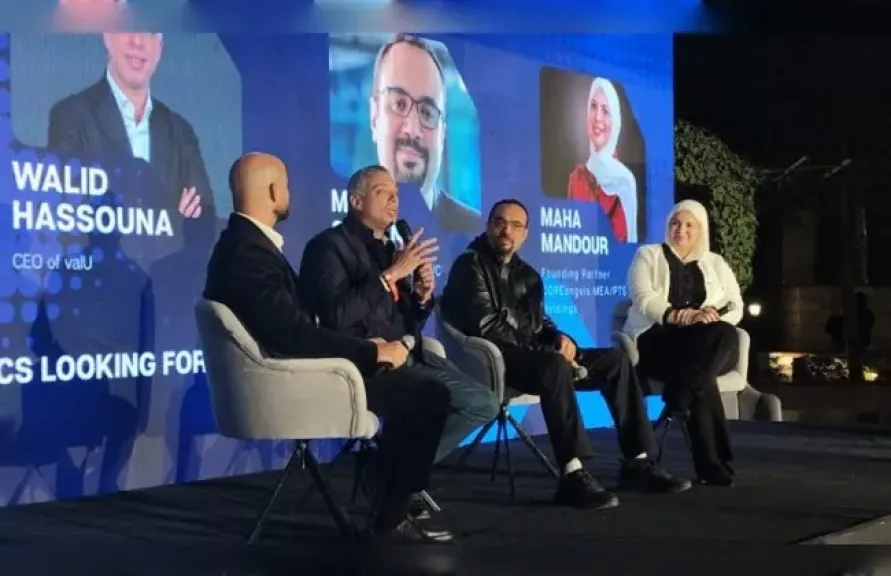
Walid Hassouna, Founder and Chief Executive Officer of valU, outlined the evolution of the company’s business model over recent years, stressing that each growth phase required different management and operational tools to keep pace with the rapid expansion in transaction volumes and the growing base of customers and merchants.
Speaking during MESKA AI SPARK VOL 2, held on Friday at Creativia, Hassouna explained that as valU’s model proved successful and scalable, the company gradually introduced mechanisms and tools that were not present at its early stages. He emphasized that confidence in the model was built through repetition and expansion, rather than sudden decisions or uncalculated leaps.
Hassouna noted that the company’s dealings with partners inside and outside Egypt initially relied on traditional evaluation methods, but evolved over time into more structured and automated processes. He underlined that valU does not claim to have developed comprehensive AI solutions from day one, stressing that artificial intelligence is not viewed as a marketing label but as a practical tool adopted gradually in response to clear operational needs.
He added that valU avoids promoting AI unless the company is either developing such solutions itself or capable of deploying them efficiently. The firm began using AI technologies in focused areas, most notably in enhancing marketing targeting to reduce advertising waste and maximize returns amid intensifying competition in the Egyptian market.
According to Hassouna, the use of AI later expanded into smart pricing models, enabling the company to reach the right customer with the right price at the optimal time, rather than exhausting resources without measurable outcomes. This approach, he said, was driven by valU’s significant growth, with the company currently processing around 40,000 transactions per day.
He revealed that this scale of operations is supported by a customer base exceeding one million users, noting that senior management closely monitors customer complaints and messages directly. Hassouna described this hands-on engagement as a natural aspect of leading a company experiencing rapid growth in Egypt. He also pointed out that valU has relied on local expertise to develop technology tools that enhance customer service efficiency, instead of attempting to build all solutions internally from scratch.
From his perspective, Hassouna argued that successful Egyptian companies are those that know how to leverage existing solutions and expertise within the market, rather than insisting on developing entire systems independently - an approach he described as costly and often inefficient. He highlighted the presence of long-established Egyptian firms specializing in credit management and operational systems, stating that building on this experience is more rational than reinventing the wheel.
Hassouna drew a comparison with global players such as Klarna, noting that companies operating across dozens of countries and serving millions of customers possess dedicated AI teams and fully in-house tools, a model closely tied to market size and purchasing power. In contrast, emerging markets like Egypt require a more pragmatic and selective approach to technology investment, given differences in customer acquisition costs and spending capacity.
He concluded by reaffirming that valU’s philosophy toward artificial intelligence is rooted in partnership and leveraging proven expertise. The company, he said, prefers working with developers and specialists who offer tested and effective tools, rather than committing substantial investments to internal solutions that may not deliver the expected return. This approach, Hassouna emphasized, is consistently communicated to investors and the board, reflecting a firm belief that technology is a means to create real value, not merely a slogan.