
The Central Bank of Egypt and the African Export-Import Bank sign a memorandum of understanding to establish a gold bank in Egypt
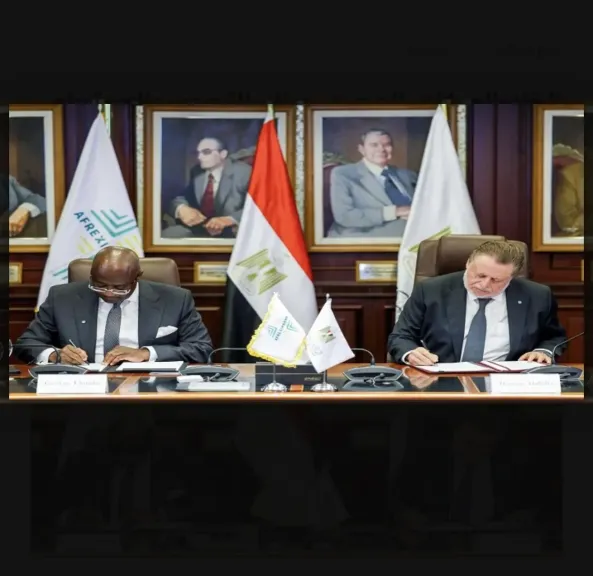
The Central Bank of Egypt and the African Export-Import Bank “Afrixim Bank” signed yesterday a memorandum of understanding to establish a bank specialized in gold at the level of the African continent. This strategic initiative aims to strengthen the reserves of central banks, reduce dependence on refining and trading centers outside Africa, and formalize the gold industry and trading system.
Hassan Abdullah, Governor of the Central Bank of Egypt, and Dr. George Elombi, President of the African Export-Import Bank, signed the memorandum of understanding at the headquarters of the Central Bank of Egypt, where the establishment of a bank specialized in gold comes in line with the vision of the Egyptian state to expand the horizons of strategic partnerships and strengthen joint cooperation with African countries in various fields, in addition to the keenness of the Export-Import Bank of Africa to promote and accelerate the added value and the strategic treatment of minerals.
This partnership also comes within the framework of a joint vision between the Central Bank of Egypt and the Export-Import Bank of Africa to promote local industrialization, support sustainable development, and promote financial and trade integration between countries, thus contributing to building a solid and advanced economic system at the continental level.
Under the memorandum of understanding, the two sides will prepare a comprehensive feasibility study to assess all technical, commercial and regulatory aspects to establish an integrated system for Gold Bank in one of the dedicated free zones in Egypt, including the establishment of an internationally accredited gold refinery, secure gold storage facilities, in addition to providing specialized financial services and advanced trading services linked to gold.
The initiative also aims to expand its scope to include all African countries, with the involvement of governments, central banks, mining companies and all institutions concerned with the gold industry, to enhance institutional cooperation and standardization of practices, and facilitate sustainable trade in gold and related services within the continent.
On this occasion, Hassan Abdullah, Governor of the Central Bank of Egypt, said that this initiative represents the nucleus of broader cooperation at the level of the African continent, with the participation of governments, central banks and actors in gold markets, and confirms Egypt's commitment to leading efforts to promote economic integration among African countries. Abdullah stressed that the choice of Egypt to be the headquarters of the new project, after completing all the necessary studies and approvals, reflects the great confidence placed by African institutions in Egypt's ability to host major continental projects, as well as its privileged geographical location linking Africa to the Middle East and Europe, which enhances Egypt's chances of being a regional center for gold trading and related financial services.
For his part, Dr. George Elombe, President of the African Export-Import Bank, stressed the commitment of the two sides to work together and unite efforts and resources to support financial stability and promote sustainable economic growth in Africa.
Dr. Elomby added: “The memorandum of understanding may seem simple in its appearance, but it returns in its content with huge economic results for our continent. Through it, we declare that Africa's gold must serve its people. This memorandum – which is part of the African Export-Import Bank's vision to exploit Africa's resources for the benefit of the continent's citizens – creates an African Gold Bank, which will help us begin to radically change the way our gold resources are extracted, refined, managed, evaluated, stored and traded, with the primary objective of preserving their value within the continent. By building the gold stockpile effectively, as other major economies have done, we support the continent's resilience, reduce its vulnerability to external shocks, promote currency stability in African countries and convertibility, and create wealth within the continent.”
It is worth mentioning that the Central Bank of Egypt and the African Export and Import Bank enjoy strong and long-term relations, and Egypt is the largest shareholder in the capital of the bank and Cairo hosts its headquarters.