


Tourism Federation Chairman: Sector Stifled by ”Impossible” Loan Conditions and Heavy Taxation
Hossam El-Shaer, Chairman of the Egyptian Federation of Tourist Chambers, stated that the tourism sector is among the most committed industries when it comes to loan repayments. Speaking at a seminar organized by the Association of Tourism Writers, he noted that the banking sector has profited significantly from funding tourism projects. Even in cases of default, banks have successfully sold troubled assets for up to five times the original debt owed.
Despite this reliable track record, El-Shaer revealed that the sector has not yet benefited from the Central Bank of Egypt’s (CBE) EGP 50 billion ($1.03 billion) tourism support initiative. He attributed this failure to "impossible conditions," specifically the strict one-year deadline granted to investors to secure the necessary licenses for loan disbursement.
CBE Initiative Constraints
The CBE initiative, originally approved by the Cabinet in October 2024 with a declining interest rate of 12%, was designed to fund the construction, renovation, or acquisition of hotel rooms. However, investors face stringent requirements, including:
Strict and rapid deadlines for obtaining operating licenses.
A mandatory commitment from investors to surrender and sell 40% of their foreign currency revenues to local banks.
While the application deadline was extended to April and the funding disbursement window to the end of next year, the structural hurdles remain a significant bottleneck for developers.
E-Visas and Entertainment Taxes
El-Shaer praised the recent implementation of electronic visas but urged the government to expand the system to all tourist-exporting countries, barring those with specific security concerns. He strongly advocated for making the e-visa entirely free of charge, mirroring policies in competing destinations like Dubai and Turkey, to significantly boost inbound traffic.
Furthermore, the Chairman demanded the immediate abolition of the amusement tax. He explained that when this tax is combined with the Value Added Tax (VAT), the total burden reaches a staggering 55% of any event's revenue. This heavy taxation stifles entertainment activities in key resorts like Sharm El-Sheikh and Hurghada, severely limiting their ability to offer attractive nightlife and leisure options to tourists.
North Coast Development: Tourism vs. Real Estate
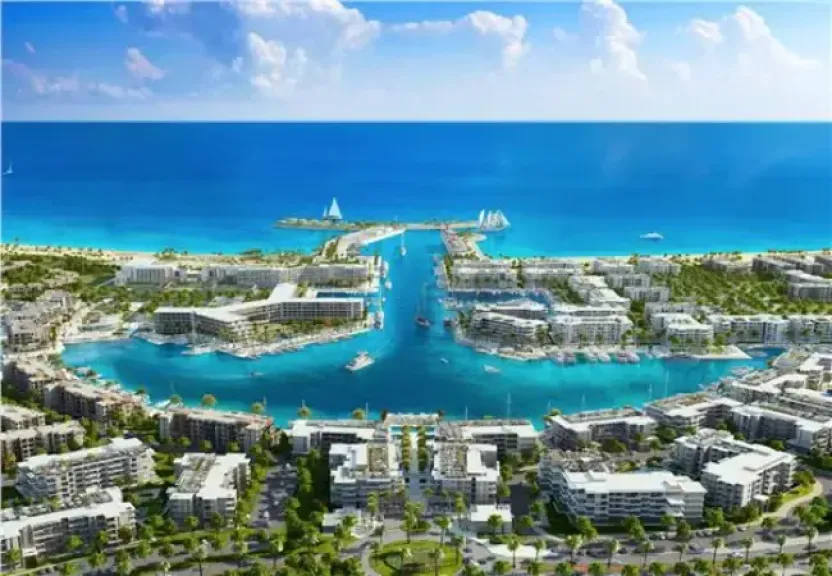
Addressing the North Coast, El-Shaer criticized the current practice of treating tourism-designated lands as standard real estate investments. He stressed that prime, first-row coastal plots must be allocated exclusively for hotels rather than residential projects. He estimated that the North Coast requires approximately 80,000 hotel rooms to transform into a global tourist destination—a target the current inventory falls drastically short of.
He criticized developers for failing to deliver promised hotel capacities, citing the "Marassi" project, which was initially slated to provide 4,000 hotel rooms but has only delivered around 1,000. El-Shaer emphasized that upcoming mega-projects, such as Ras El Hekma, must strictly enforce hotel capacity requirements to balance tourism and real estate. He praised Hamed El Chiaty's "Almaza Bay" as the region's only genuine model of integrated tourism investment.
Reviving Heritage: Nazlet El-Semman
Finally, El-Shaer highlighted the massive potential of converting heritage houses into small tourist lodges to boost cultural tourism, drawing parallels to the highly successful model seen in Marrakech, Morocco. He pointed out that the Nazlet El-Semman area, which holds potential for around 4,000 rooms, is currently undergoing replanning by an Egyptian consultancy firm. Development works in the area are expected to conclude within a year of the master plan's finalization.