


Singapore’s Manufacturing Sector Embraces AI and Advanced Technologies to Boost Productivity
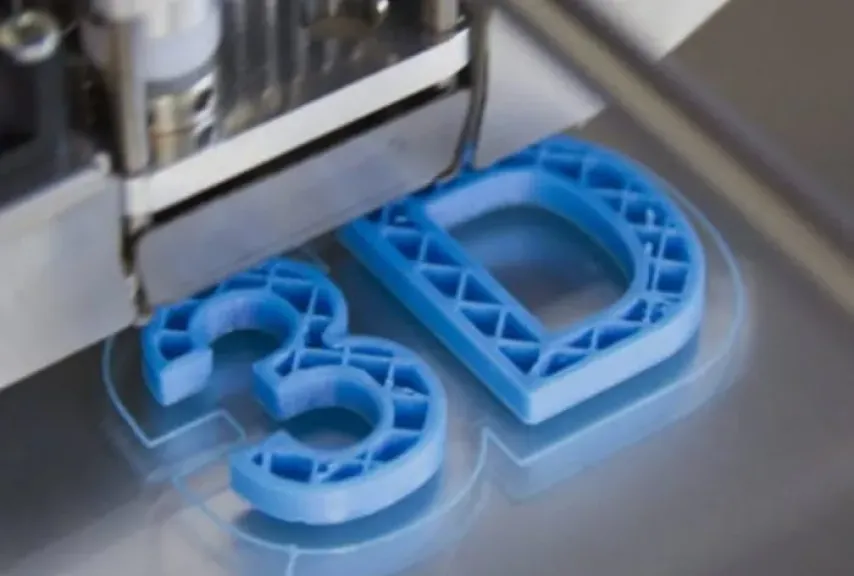
Singapore’s manufacturing sector has undergone a significant transformation in recent years, as major companies increasingly adopt artificial intelligence, robotics, and 3D printing to enhance productivity, improve efficiency, and reduce operational costs—positioning the country as a global model for smart and sustainable manufacturing.
At the Coca-Cola Singapore plant in Tuas, the company developed advanced robotic systems in collaboration with the Agency for Science, Technology and Research (A*STAR). These systems automate complex tasks that previously required significant time and manual effort, such as handling ingredient bags and rapidly identifying their size and type with high accuracy.
The factory also implemented a dynamic production scheduling system that reduced planning time from several days to less than one hour, while improving workforce efficiency, increasing productivity, and minimizing errors in regional order processing.
Factory Manager Gerardo Artavia said the transformation led to a 28% increase in productivity, a 70% improvement in labor efficiency, and a 31% improvement in on-time deliveries, while carbon dioxide emissions were reduced by 34%. He added that collaboration with A*STAR enabled the development of intelligent industrial solutions that combine human expertise with artificial intelligence to enhance safety and improve the quality of work for employees.
In the marine engineering sector, Mencast Marine produced Singapore’s first 3D-printed marine propellers in 2023, in collaboration with A*STAR and the National Additive Manufacturing Innovation Cluster (NAMIC). The technology reduced manufacturing time by half and lowered the carbon footprint of each propeller by around 36%, while significantly reducing material waste.
The company also uses artificial intelligence to generate thousands of design variations within days, compared with weeks using traditional methods. By integrating Wire Arc Additive Manufacturing (WAAM) technology, Mencast can produce high-performance, customized propellers in a precise and sustainable manner.
CEO Glendell Sim noted that these innovations reduced the physical workload for engineers and technicians while enabling them to develop new skills in robotics and digital process control. As a result, productivity increased by 30%, opening opportunities to expand into global markets including Europe, Southeast Asia, and advanced defense and engineering sectors.
According to the report, manufacturing accounted for 18.5% of Singapore’s GDP in 2025, and the country’s Manufacturing 2030 strategy aims to grow the sector by 50% by strengthening technological capabilities, improving digital skills among the workforce, and expanding partnerships between local and multinational companies with a focus on innovation and sustainability.
A*STAR has also developed AIMie, an interactive AI system designed to work alongside humans in factories by analyzing industrial data, supporting operational decisions, and optimizing production processes. This allows workers to shift toward higher-value analytical and supervisory roles, making factories more adaptable to changes in global demand.
Today, Singapore stands as a global advanced manufacturing hub, where local and multinational companies benefit from a strong innovation ecosystem and smart technologies to enhance productivity, reduce costs, and improve sustainability across industries including food production, engineering, and maritime manufacturing.
related topics
 BMW Launches Pilot Project to Deploy Multi-Task Robots in Car Production Lines
 Egypt and World Bank Explore Venture Capital Fund to Boost Startup Growth
 MENA Startups Raise Over $279 Million in February 2026 as UAE and...
 Egypt Ranks Third in MENA Startup Funding as Local Firms Secure $63.6...
 MENA Startups Raise $279 Million in February as Investor Confidence Holds Strong
 Nvidia Expands Autonomous Vehicle Push with $103 Million Investment in UK Startup...
 ChatGPT Approaches One Billion Weekly Users as Global AI Adoption Accelerates
 Meta Creates New AI Unit to Accelerate Innovation and Integrate Research Efforts
 Indian Startups Raise $2 Billion in February 2026, Led by Neysa’s $1.2...
 Egyptian Group collaborates with KAD on the Isola Sheraton project, coinciding with...
 The AI Arms Race Shifts to Trillions in Infrastructure Spending
 Africa’s Top 10 Startups Capture Over 92% of January 2026 Funding